


Types of Tracing Tools for Literacy Development in Kids
Tracing tools are defined as structured educational resources that build children’s literacy by combining visual, tactile, and auditory learning pathways into a single practice activity. The types of tracing tools for literacy development range from structured alphabet worksheets and magnetic boards to digital custom generators, each targeting fine motor skills, phonics awareness, and letter recognition. Research confirms that short daily sessions of 5 to 15 minutes produce stronger literacy gains than longer, fatigue-inducing practice. For multilingual families raising children in Punjabi, Hindi, Gujarati, or any heritage language, choosing the right tool is the difference between a child who connects with their roots and one who doesn’t.
1. Structured alphabet tracing worksheets
Structured alphabet tracing worksheets are the most widely used type of educational tracing tool, and for good reason. They reduce cognitive load by presenting clear stroke order through directional arrows, consistent letter grids, and progressive difficulty levels. A child tracing the letter “A” with a numbered arrow sequence is not guessing where to start. That clarity frees mental energy for the more important task: connecting the letter shape to its sound.
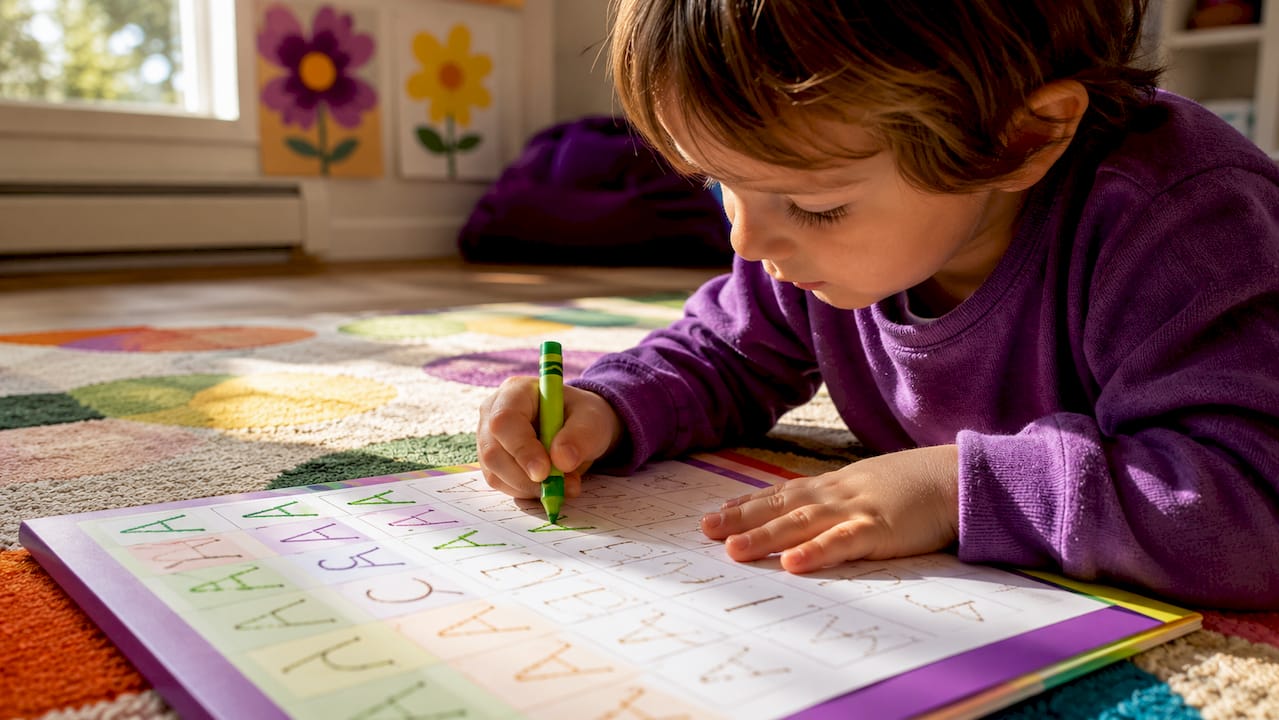
The best worksheets also embed letter-sound associations directly on the page, pairing each letter with a familiar image. This supports orthographic mapping, the process by which children store letter patterns in long-term memory for reading fluency. Orthographic mapping in children aged 3 to 6 typically develops within 3 to 6 months of consistent daily tracing practice.
Key features to look for in structured worksheets:
- Directional arrows showing stroke order for each letter
- Consistent font aligned with the child’s school curriculum
- Letter-sound picture prompts on every page
- Graduated difficulty from tracing to copying to independent writing
- Space for multiple repetitions without crowding
Pro Tip: Match the font on your worksheets to the exact font your child’s teacher uses in class. A mismatch between print styles, such as D’Nealian versus Zaner-Bloser, can confuse young learners and slow down their progress.
Curriculum alignment is non-negotiable. Mismatched stroke order between home tools and classroom standards creates confusion that slows literacy outcomes. Always check with your child’s teacher before introducing a new worksheet set.
2. Magnetic tracing boards
Magnetic tracing boards are multisensory tracing tools that deliver tactile and auditory feedback simultaneously, making them one of the most engaging options for children who struggle with traditional pencil tasks. When a child traces a letter groove and hears the satisfying click of the magnetic stylus, two sensory pathways activate at once. That dual engagement holds attention far longer than a silent worksheet.
Magnetic boards typically cost between $15 and $30 and can be reused indefinitely, making them more cost-effective over time than paper-based resources. Many models feature color-coded vowels and consonants, directional arrows for stroke order, and durable plastic construction that survives a three-year-old’s enthusiasm. The JoyCat 2-in-1 double-sided board, for example, includes both uppercase and lowercase letters on a single board with a magnetic stylus that provides sensory click feedback.
These boards are particularly recommended for:
- Children who resist sitting still for paper tracing
- Learners with fine motor delays who need extra tactile reinforcement
- Multilingual households practicing two or more scripts
- Classrooms needing a reusable, low-mess tracing option
Pro Tip: Pair the magnetic board with verbal sound production. Ask your child to say the letter sound out loud each time they complete a stroke. This multisensory mapping of auditory and kinesthetic pathways creates stronger neural connections than silent tracing alone.
3. Sand and sensory tracing methods
Sand tracing is one of the oldest and most effective kinesthetic literacy tools available, and it costs almost nothing. A shallow tray filled with fine sand, salt, or even rice gives children a forgiving surface to practice letter formation with their fingers. Mistakes disappear with a gentle shake, removing the anxiety of permanent errors that can discourage young writers.
This method supports fine motor development through the resistance of the medium. Tracing in sand requires slightly more muscle engagement than tracing on paper, which builds the hand strength needed for pencil grip. For children learning scripts like Devanagari or Gurmukhi, where curved strokes are common, sand tracing gives them freedom to practice flowing movements before committing to paper.
Sand tracing works best as a warm-up activity before structured worksheet practice. Spend two to three minutes on sand, then transition to paper. The motor memory built in the sand carries directly into the more formal tracing task.
4. Digital and customizable tracing tools for multilingual learners
Digital tracing tools and custom worksheet generators are the most flexible option for multilingual families, because they allow you to create materials in any language using your own word banks. A parent raising a child in both English and Hindi can generate a worksheet set featuring Hindi vocabulary from the child’s daily life, not generic textbook words. That cultural relevance matters enormously for motivation and retention.
Custom worksheet generators like the Nurtured Neurons Find-and-Trace tool offer free or low-cost creation of tracing materials with specific sight words and letter sets. Digital apps add gamification layers, progress tracking, and audio pronunciation support that static worksheets cannot match.
Here is a comparison of digital versus physical tracing tools for multilingual use:
| Feature | Digital tools | Physical tools |
|---|---|---|
| Language customization | High (any script, any word bank) | Limited (pre-printed content) |
| Cost over time | Low to free | Moderate (paper, ink) |
| Sensory engagement | Visual and auditory | Tactile, auditory, kinesthetic |
| Screen time consideration | Requires management | None |
| Portability | High (tablet or phone) | Moderate (books, boards) |
Supporting multilingual learners effectively requires materials that align with both the home language and the school curriculum. Digital tools make that alignment achievable without expensive specialist resources. For families exploring bilingual tracing options, the combination of digital customization and physical practice produces the strongest results.
5. Reusable magic ink tracing books
Reusable tracing books with magic ink technology represent a newer category of physical tracing tool that combines the tactile experience of writing with the sustainability of a digital tool. The child traces letters with a water-based pen, the ink appears, and the page dries clear and ready to use again. No printing, no waste, and no running out of worksheets mid-session.
Littlepumpkins builds its entire product line around this technology, specifically for children aged 3 to 6 learning scripts in English, Hindi, Punjabi, Gujarati, and Nepali. The magic ink format removes the pressure of permanent mistakes, which is especially valuable for children learning a heritage script they do not see in their school environment. When tracing feels like play rather than a test, children engage more willingly and practice longer.
The reusable format also makes these books practical for daily routines. Keep one on the kitchen table during breakfast, one in the car, one in the school bag. Repetition without the cost of replacement is the real advantage here.
6. Popping bead and manipulative tracing tools
Popping bead boards and letter manipulatives add a physical, three-dimensional element to letter tracing that flat surfaces cannot replicate. A child who presses raised letter beads along a groove is using their entire hand, not just their fingertips. This whole-hand engagement supports children who are not yet ready for the fine motor precision that pencil tracing demands.
These tools are particularly effective for children aged 3 to 4 who are in the early stages of writing readiness. The physical resistance of the beads provides proprioceptive feedback, which helps the brain build a spatial map of each letter’s shape. That spatial map is what children draw on when they later attempt to write letters independently.
Manipulative tools work best alongside, not instead of, flat tracing practice. Use them in the first few weeks to build letter shape awareness, then introduce worksheets or magnetic boards once the child can describe the shape of a letter with their hands.
7. How to choose the right tracing tool for your child
Choosing the right tracing tool depends on four factors: your child’s age and motor development, the language or script being learned, the school curriculum’s stroke order standards, and your child’s sensory preferences.
Follow this sequence when making your decision:
- Check the school curriculum first. Ask your child’s teacher which font and stroke order system the classroom uses. Curriculum-aligned tools prevent the confusion that comes from learning two different ways to form the same letter.
- Assess your child’s motor readiness. Children under 4 typically benefit more from magnetic boards and manipulatives than from pencil-based worksheets. Children aged 4 to 6 can handle structured worksheets with directional arrows.
- Consider the language context. For multilingual households, prioritize customizable digital tools or multilingual physical books. A child learning Devanagari script needs materials designed for that script’s specific stroke patterns, not adapted English tools.
- Match the tool to the child’s sensory style. A child who resists sitting still will engage more with a magnetic board or sand tray than with a worksheet. A child who loves coloring and drawing will likely take to illustrated worksheet books naturally.
- Balance screen time. Digital tools are powerful but require intentional management. For children under 5, physical tools should make up the majority of tracing practice, with digital tools used as a supplement.
For families navigating early childhood learning materials across two or more languages, the most practical approach is a combination: one physical tool for daily tactile practice and one digital or customizable resource for language-specific content.
Key takeaways
The most effective tracing tools for literacy development combine multisensory engagement with curriculum alignment and language-specific customization.
| Point | Details |
|---|---|
| Daily short sessions work best | Five to fifteen minutes of daily tracing outperforms longer, infrequent sessions for letter recognition gains. |
| Match tools to curriculum | Stroke order and font must align with classroom standards to prevent confusion in young learners. |
| Multisensory tools engage more children | Magnetic boards and sand tracing activate tactile and auditory pathways that worksheets alone cannot reach. |
| Multilingual families need customizable options | Digital generators and multilingual physical books allow culturally relevant practice in heritage scripts. |
| Tracing works best with vocalization | Saying letter sounds aloud during tracing creates stronger neural connections than silent practice. |
Why I think most parents underestimate the sound-tracing connection
Most conversations about tracing tools focus entirely on the physical act of forming letters. The hand moves, the pencil follows, the letter appears. That is only half the story. Tracing integrated with sound vocalization creates multisensory mapping that strengthens neural pathways far more effectively than visual tracing alone.
In my experience working with multilingual families, the children who make the fastest literacy gains are not the ones with the most worksheets. They are the ones whose parents sit beside them, say the letter sound out loud, and ask the child to repeat it while their hand moves. That combination of auditory and kinesthetic input is what structured literacy researchers call multisensory mapping, and it is the mechanism behind why tracing works at all.
I also want to push back gently on the perfectionism trap. Encouraging rhythmic flow and consistent stroke order matters far more than perfect letter formation at age 4. A child who traces confidently and joyfully, even if the letters wobble, is building the motor memory and positive associations that lead to fluent writing. A child who is corrected constantly learns to avoid writing altogether.
The other thing I have seen parents overlook is the power of daily conversational literacy. Talking about letters at breakfast, singing alphabet songs in the car, pointing to signs during a walk: these activities complement tracing and improve long-term literacy outcomes just as much as formal practice. Tracing is one tool in a much richer environment. Build the environment first, and the tools will do their job.
— Bobby
Explore Littlepumpkins tracing books for multilingual kids
Littlepumpkins offers a range of reusable magic ink tracing books designed specifically for children aged 3 to 6 learning to write in multiple languages. Each book combines engaging illustrations with structured letter formation practice, making daily tracing feel like an adventure rather than a chore.
Whether your child is learning English, Hindi, Nepali, or Gujarati, there is a book built for their script and their stage. The reusable format means one book supports months of practice without waste, and the magic ink technology keeps every session feeling fresh. Browse the full kids’ writing books collection to find the right fit for your child’s language journey. You can also explore the Hindi tracing book and the Nepali script book for heritage language practice that connects children to their roots, one magical letter at a time.
FAQ
What are the main types of tracing tools for literacy?
The main types include structured alphabet worksheets, magnetic tracing boards, sand tracing trays, reusable magic ink books, digital custom generators, and manipulative bead boards. Each type targets a different combination of motor, visual, and auditory learning pathways.
How long should a child practice tracing each day?
Short daily sessions of 5 to 15 minutes are more effective than longer sessions, which risk fatigue and negative associations with writing. Consistency across days matters more than session length.
Can tracing tools support multilingual literacy development?
Yes. Digital custom generators and multilingual physical books allow families to practice tracing in heritage scripts like Devanagari, Gurmukhi, or Gujarati alongside English. Culturally relevant materials improve motivation and language retention for multilingual learners.
Should tracing be combined with phonics practice?
Tracing is most effective when integrated with phonics and sound production. Asking children to say the letter sound aloud while tracing creates stronger letter-sound connections than silent tracing alone.
At what age should children start using tracing tools?
Most children are ready for guided tracing activities between ages 3 and 4, starting with large-format magnetic boards or sand trays before progressing to pencil-based worksheets around age 4 to 5. Motor readiness varies, so follow the child’s grip strength and interest as your guide.