


Why Tracing Helps Children Learn Scripts Effectively
Tracing is a guided handwriting activity where children follow pre-drawn letter shapes to build recognition, motor memory, and the confidence to write independently. It is one of the most direct ways young learners internalize the visual and physical patterns of any script, from English to Hindi to Punjabi. The reason why tracing helps children learn scripts goes far beyond keeping a pencil on a dotted line. It activates a coordinated loop between what the eye sees and what the hand does, creating a motor memory linked to letter shapes that typing or passive recognition simply cannot replicate. Montessori educators have understood this for decades. Now, developmental research confirms it.
Why tracing helps children learn scripts: the brain science
Tracing works because it creates what researchers call a visual-motor perception-action loop. When a child traces a letter, the brain simultaneously processes the shape, guides the hand movement, and stores both as a paired memory. This is fundamentally different from recognizing a letter on a screen.
A 2026 kindergarten study comparing handwriting and typing found that handwriting groups outperformed typing groups on five of six letter-learning measures. Both groups reached similar letter identification scores of around 92%, but handwriting produced significantly better recall and letter assembly skills. That gap matters. Recall and assembly are exactly what children need when they sit down to write a word from memory, not just point to a familiar shape.
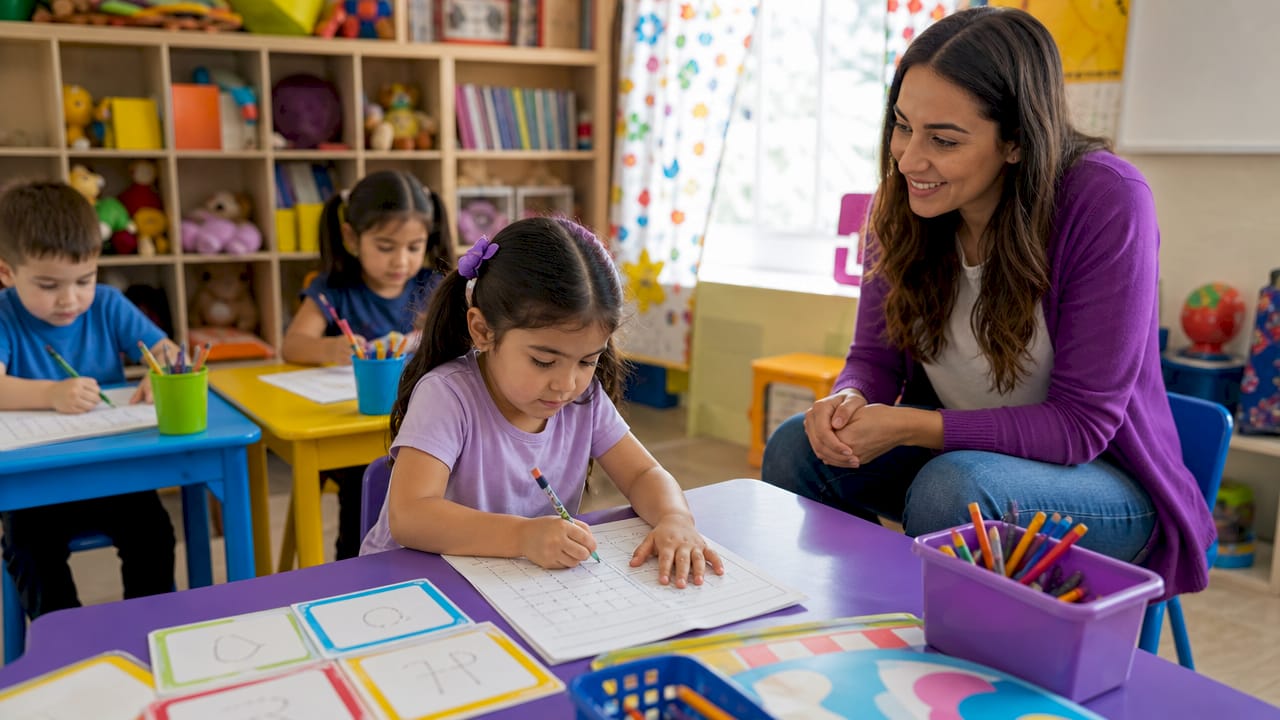
The perception-action loop also explains why tracing supports coordinated eye-hand movement in ways that passive learning cannot. Each stroke a child traces trains the hand to anticipate the next direction, building what motor development specialists call a motor plan. This plan is the internal script the brain runs when writing a letter without any guide in front of it.
Pro Tip: Ask your child to say the letter name or its sound out loud while tracing. This verbal layer strengthens the connection between the motor memory and the phonetic identity of the letter, making recall faster and more reliable.
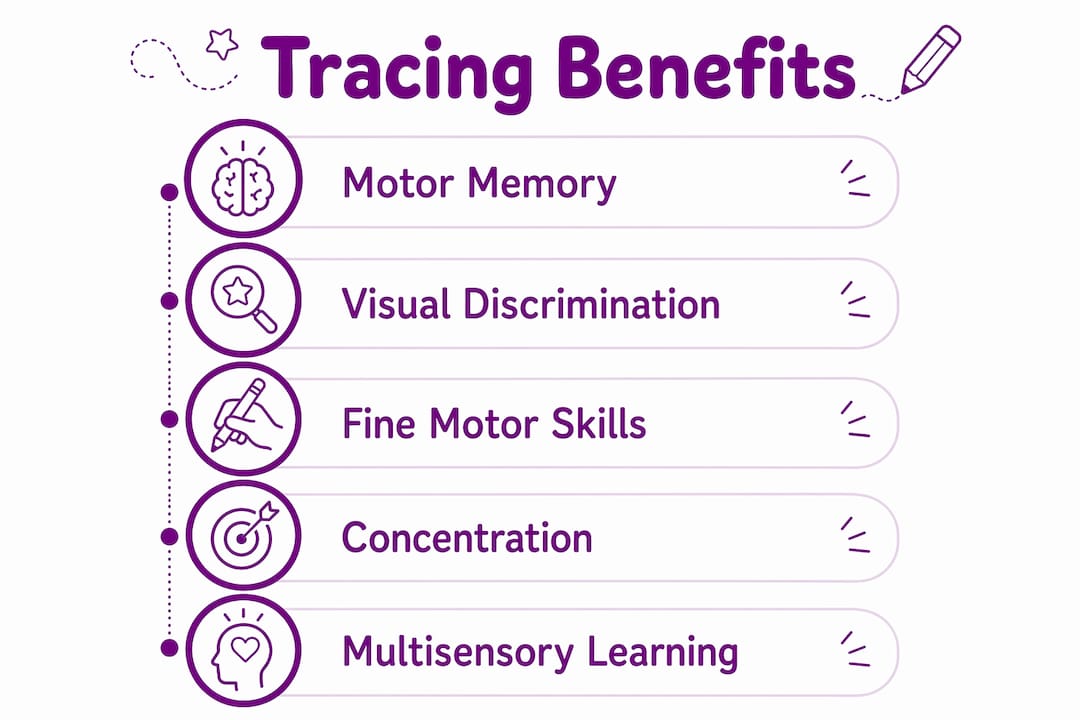
Tracing also builds fine motor control, visual-spatial awareness, and concentration, all of which underpin handwriting readiness and broader literacy competencies. These are not side benefits. They are the foundation every child needs before formal writing instruction begins.
How multisensory tracing deepens script learning
The Montessori method offers the clearest example of multisensory tracing in practice. Children trace sandpaper letters with their fingertips while simultaneously saying the phonetic sound of each letter aloud. This approach links three channels at once: touch, movement, and sound. The result is a layered learning pathway that is far richer than visual recognition alone.
Pairing tactile input with speech creates associations that children can retrieve from multiple angles. If a child forgets the visual shape of a letter, the memory of how it felt to trace it, or the sound they said while doing so, can trigger recall. This redundancy is exactly what makes multisensory tracing so effective for learning scripts with unfamiliar shapes, including non-Latin scripts like Devanagari or Gurmukhi.
Here is what multisensory tracing for script learning looks like in practice:
- Trace and say: The child traces each letter while verbalizing its phonetic sound, linking movement and language simultaneously.
- Textured surfaces: Using materials like sandpaper letters, raised letter cards, or textured tracing boards adds tactile feedback that reinforces the shape in memory.
- Color-coded strokes: Assigning different colors to different strokes within a letter helps children see the structure of complex script characters more clearly.
- Air tracing: After tracing on paper, the child traces the letter in the air with a large arm movement, reinforcing the motor plan at a larger scale.
- Trace then recall: The child traces the letter several times, then attempts to write it from memory immediately after, testing whether the motor plan has transferred.
Montessori cursive-first tracing also activates multiple brain regions and improves visual discrimination, which helps children distinguish commonly confused letters. For scripts like Hindi or Punjabi, where several characters share similar visual features, this discrimination ability is especially valuable.
What happens when children trace too much
Tracing is a scaffold, not a destination. Heavy reliance on dotted-line tracing can actually hinder independent letter formation by removing the decisions that build a real motor plan. When a child only traces, they practice staying within lines. They do not practice choosing where to start a stroke, which direction to move, or how to sequence the parts of a letter. Those decisions are exactly what independent writing requires.
This is sometimes called the “tracing trap.” A child can trace a letter perfectly and still be unable to write it from memory. The tracing has trained precision, but not the internal motor program needed for fluent, transferable writing.
The solution is a planned fade-out. Here is a practical sequence for moving from guided tracing to independent writing:
- Full tracing with dotted guides. The child traces complete letters with all stroke guides visible. This builds initial familiarity with the shape and direction.
- Partial guides. Remove some of the dotted lines, leaving only starting points or the first stroke. The child must complete the letter using their developing motor plan.
- Starting point only. Provide just a dot showing where the letter begins. The child forms the entire letter independently from that single cue.
- Blank practice. The child writes the letter with no visual guide at all, relying entirely on their internalized motor plan.
- Word-level writing. The child combines letters into words from memory, which tests whether the motor plans for individual letters are truly transferable.
Pro Tip: Test whether tracing is actually working by covering the model letter and asking your child to write it from memory. If they cannot, more independent practice is needed before moving on, not more tracing.
Gradual scaffold removal after tracing mastery is the key to building autonomous letter generation and writing speed. Tracing that never fades creates motor dependence, not motor skill.
How tracing fits into a full writing readiness program
Tracing is one piece of a larger developmental picture. Research published in 2026 found statistically significant improvements in scribbling, drawing, and letter-like shape formation when early childhood programs included intentional fine motor activities. These early mark-making behaviors are directly linked to later writing success.
Children move through a natural progression from play-based mark-making to formal script writing. Tracing fits in the middle of that progression, after children have developed basic grip and spatial awareness through drawing, and before they are ready for fully independent letter formation.
The table below shows how different activities contribute to writing readiness at each stage:
| Activity | Developmental contribution | Typical age range |
|---|---|---|
| Scribbling and free drawing | Builds grip strength, spatial awareness, and symbolic thinking | 2 to 3 years |
| Shape tracing (circles, lines, curves) | Develops stroke control and visual-motor coordination | 3 to 4 years |
| Letter tracing with guides | Introduces letter shapes and motor plans for specific scripts | 4 to 5 years |
| Partial tracing and copying | Transfers motor plans to independent letter formation | 5 to 6 years |
| Independent writing from memory | Confirms transferable motor plans and fluent script production | 6 years and up |
Complementary activities that support this progression include threading beads, cutting with scissors, finger painting, and using alphabet tracing worksheets designed for progressive skill building. Each of these strengthens the fine motor control and hand-eye coordination that tracing depends on. The goal is not to rush children to formal writing. It is to build writing readiness through a sequence of activities that each add a new layer of skill.
Key takeaways
Tracing helps children learn scripts by building motor memory, visual discrimination, and multisensory letter associations that support both reading and independent writing.
| Point | Details |
|---|---|
| Motor memory over recognition | Tracing creates a perception-action loop that typing and passive viewing cannot replicate. |
| Multisensory tracing works best | Pairing tracing with phonetic sounds and tactile materials builds richer, more retrievable letter memories. |
| Fade the scaffold deliberately | Move from full dotted guides to partial guides to blank practice to build true motor independence. |
| Tracing fits a broader program | Combine tracing with drawing, scribbling, and fine motor play for complete writing readiness. |
| Test recall, not just tracing accuracy | Ask children to write letters from memory to confirm that motor plans have transferred. |
What I have learned about tracing after years of watching children write
Most parents and educators celebrate the moment a child traces a letter neatly. I understand that instinct completely. Neat tracing looks like progress. But the most important thing I have learned is that neatness on a dotted line is not the same as knowing how to write a letter.
The children who struggle most with independent writing are often the ones who spent the longest time tracing without ever being asked to write from memory. They have trained their hands to follow, not to lead. The fix is not more tracing. It is earlier, more deliberate independence practice, even when the result looks messy.
I also think we underestimate how much verbal cues matter during tracing. Saying “down, then across” while tracing the letter T is not just narration. It is building a second memory pathway for the same letter. When the visual memory fades, the verbal cue can retrieve the motor plan. This is especially true for children learning non-Latin scripts like Hindi or Punjabi, where the shapes have no prior visual familiarity to anchor them.
The other thing worth saying plainly: play-based learning builds writing motivation in ways that worksheets alone cannot. A child who wants to write will practice more, and more practice is ultimately what builds fluency. The best tracing tools are the ones that make children want to pick them up again tomorrow.
— Bobby
Bring tracing to life with Littlepumpkins
Littlepumpkins designs tracing and handwriting books specifically for children aged 3 to 6, with a focus on scripts that many families want to pass on, including Hindi and Punjabi. The books use reusable magic ink technology, so children can trace the same letters again and again without wasting paper. Each page pairs letter tracing with engaging illustrations that make practice feel like play. The multisensory design aligns naturally with the Montessori principles discussed in this article. If you are looking for a practical, joyful way to bring script learning into your daily routine, explore the full range of tracing and handwriting books at Littlepumpkins and find the right fit for your child.
FAQ
Why does tracing help more than just looking at letters?
Tracing creates a visual-motor perception-action loop that links the shape of a letter to a physical movement, producing motor memory that passive recognition cannot build. A 2026 kindergarten study found that handwriting groups outperformed typing groups on letter recall and assembly, even when identification scores were similar.
How many times should a child trace a letter before writing independently?
There is no fixed number, but the goal is to trace until the child can write the letter from memory without a guide. Test this regularly by covering the model and asking for an independent attempt.
Can tracing help children learn non-English scripts like Hindi or Punjabi?
Tracing is especially valuable for non-Latin scripts because the shapes have no prior visual familiarity. Pairing tracing with phonetic verbalization, as the Montessori method recommends, helps children build both visual and motor memories for unfamiliar characters.
What is the risk of too much dotted-line tracing?
Heavy reliance on dotted guides can prevent children from developing the internal motor plans needed for independent writing. Experts recommend a planned fade-out from full guides to partial guides to blank practice.
What activities should accompany tracing for best results?
Drawing, scribbling, bead threading, and cutting with scissors all build the fine motor control that tracing depends on. A 2026 study linked these early mark-making activities directly to improved emergent writing and letter-like form production.