


Best Bilingual Books for Kids' Language Learning
Bilingual books are defined as children’s literature that presents text in two languages simultaneously, making them the most direct tool for building dual-language skills and cultural identity in early childhood. The best bilingual books for children combine engaging storytelling, culturally authentic illustrations, and age-appropriate language complexity to support both heritage preservation and literacy development. Parents and educators searching for the right titles face a real challenge: bestseller lists track top books across major outlets like the NYT, Publishers Weekly, USA Today, Amazon, and indie lists, but bilingual children’s books rarely appear there. The most effective selections come from specialized databases, library curation services, and mood-based tools designed specifically for this purpose.
1. Top bilingual books recommended for language learning
The ten titles below appear consistently in literacy specialist recommendations and curated library databases. Each one supports dual-language development and cultural awareness for children aged 3–8.
“Alma and How She Got Her Name” (English/Spanish)
- Age range: 4–8
- Themes: family heritage, identity, naming traditions
- Why it works: the story connects a child’s name to her ancestors, sparking natural conversations about cultural roots
“The Name Jar” (English/Korean)
- Age range: 5–8
- Themes: belonging, cultural pride, friendship
- Why it works: children who feel caught between two cultures see themselves reflected in the main character
“Grandfather’s Journey” (English/Japanese)
- Age range: 5–8
- Themes: immigration, longing, belonging
- Why it works: the watercolor illustrations carry emotional weight that transcends language barriers
“Islandborn” (English/Spanish)
- Age range: 5–9
- Themes: Caribbean heritage, memory, community
- Why it works: the story builds vocabulary around cultural memory, not just everyday objects
“Eyes That Kiss in the Corners” (English/Chinese)
- Age range: 4–8
- Themes: beauty, identity, family resemblance
- Why it works: it reframes cultural features as sources of pride, which builds positive self-image alongside language
“Fry Bread” (English/Native American languages)
- Age range: 4–8
- Themes: Indigenous culture, food traditions, community
- Why it works: the poetic structure makes it ideal for read-aloud practice in two languages
“My Papi Has a Motorcycle” (English/Spanish)
- Age range: 4–7
- Themes: neighborhood, Latino identity, father-child bonds
- Why it works: the vivid street scenes give children concrete vocabulary anchored in real life
“Drawn Together” (English/Thai)
- Age range: 4–8
- Themes: intergenerational connection, art as language
- Why it works: the wordless middle section shows children that communication goes beyond spoken language
“Bilal’s Magnificent Daal” (English/Urdu)
- Age range: 4–7
- Themes: South Asian food culture, family cooking, creativity
- Why it works: food-based vocabulary is highly memorable and emotionally connected for young learners
“When You Trap a Tiger” (English/Korean)
- Age range: 6–9
- Themes: Korean folklore, grief, storytelling
- Why it works: folklore structures help children absorb a second language through familiar narrative patterns
Pro Tip: When you buy books online, search specifically for “dual-language edition” rather than “bilingual” to find titles that present both languages in equal type size. Many publishers use smaller font for the heritage language, which signals to children that one language matters less.
2. How library services help you find the right bilingual titles
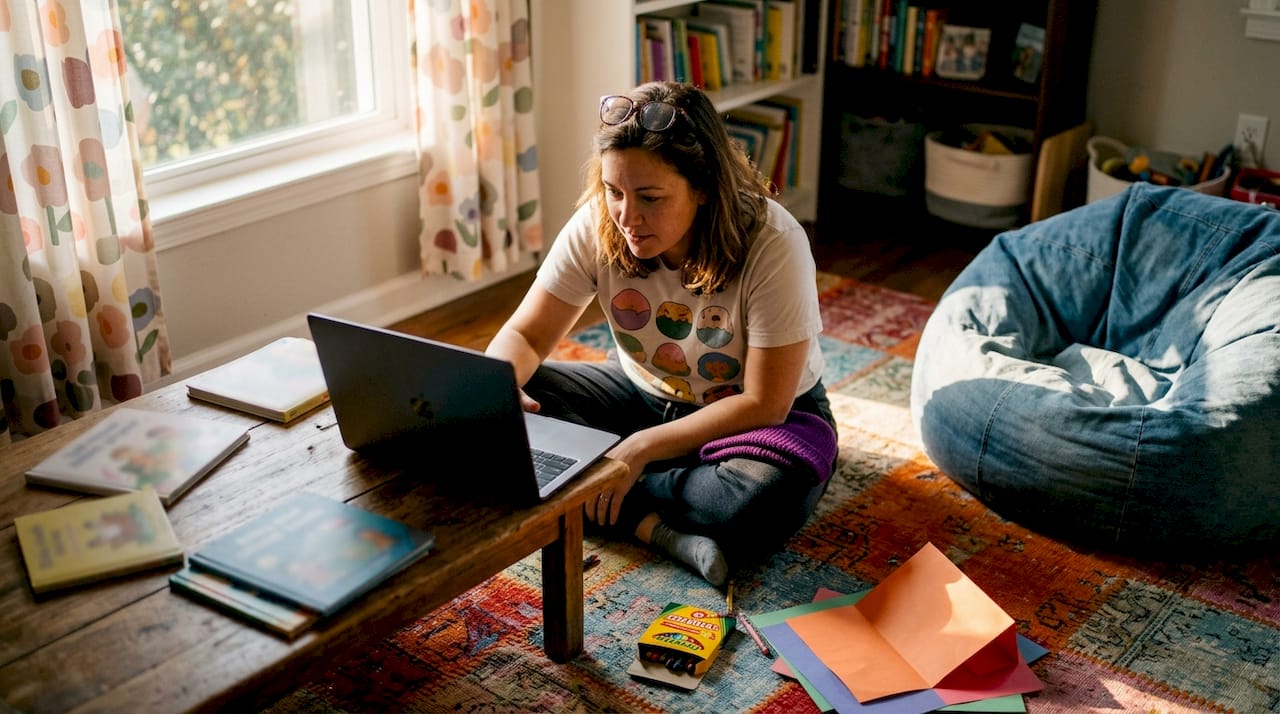
Free library curation services are one of the most underused tools available to parents and educators. Library curation services like BookMates Jr. allow parents to request up to 10 books on specific language themes, with a 7-day pick-up turnaround. That means you describe your child’s language background and interests, and a trained librarian assembles a personalized stack for you.
The value goes beyond convenience. Library professionals identify bilingual gems that never appear in commercial bookstore recommendations, offering more culturally authentic selections than retail algorithms can surface. A librarian who specializes in world languages collections will know which Punjabi picture books have accurate script representation and which Hindi titles use vocabulary appropriate for diaspora children rather than children raised in India.
Databases add another layer of precision. AR BookFinder and NoveList Plus help parents select bilingual books matched to a child’s reading level and developmental stage, with databases covering over 150,000 fiction titles. The Accelerated Reader system indexes books by topic and proficiency, so you can find a bilingual title about family traditions at exactly the right complexity level, even if the book is not labeled as a language learning resource.
Pro Tip: When you visit your library, ask specifically for the “world languages” or “heritage languages” section rather than the general children’s area. These collections are often shelved separately and contain titles that never make it onto popular book review sites.
3. What features to look for in bilingual children’s books
Choosing the right bilingual title requires evaluating several concrete features. The table below organizes the key criteria.
| Feature | What to look for |
|---|---|
| Age appropriateness | Reading level matches child’s current proficiency in both languages |
| Cultural authenticity | Illustrations and story details reflect the actual culture, not a generalized version |
| Language balance | Both languages appear in equal prominence on the page |
| Interactive elements | Includes prompts, repetition, or activities that invite participation |
| Audio or digital companion | QR codes or companion apps that let children hear native pronunciation |
| Script accuracy | Heritage language text uses correct script, not romanized approximations |
Age-appropriate language complexity is the single most important feature. A book that is too advanced in the heritage language will frustrate a child and create negative associations with that language. The AR BookFinder indexing system gives parents a practical way to check reading level before purchasing, even for titles not explicitly marketed as educational.
Cultural authenticity matters just as much as language accuracy. Illustrations that show generic “ethnic” imagery rather than specific cultural details teach children a flattened version of their heritage. Look for titles where the author shares the cultural background being depicted. The role of illustrations in children’s learning is significant: visual details reinforce vocabulary and cultural knowledge simultaneously.
Pro Tip: Before you buy a bilingual book online, download a preview and check whether the heritage language text appears in the correct script. Romanized text in place of Devanagari, Gurmukhi, or Chinese characters is a red flag for cultural shortcuts.
4. How to match bilingual books to your child’s mood and stage
Matching a book to a child’s emotional state on a given day produces better engagement than selecting by topic alone. Mood-based book searching using emotional tags and themes significantly improves engagement and long-term retention compared to strictly genre-based selection. A child who is feeling homesick for grandparents will connect deeply with an intergenerational story. A child who is curious and energetic will respond better to an adventure-driven plot with action vocabulary.
Literacy specialists recommend using mood-based or interest-specific quizzes to narrow down bilingual book choices, which builds genuine reading interest rather than treating reading as a chore. The practical approach looks like this:
- Observe the child’s current emotional state before selecting a title. A child processing a new sibling will engage differently than a child celebrating a birthday.
- Match cultural themes to current family events. If your family just celebrated Diwali or Vaisakhi, choose a book that extends that experience rather than introducing an unrelated cultural context.
- Rotate between familiar and new languages. On days when a child resists the heritage language, start with the English side of the page and let them lead the switch.
- Use food, music, and family stories as bridges. Books about cooking or celebrations connect language to sensory memory, which strengthens retention.
- Track which titles a child requests repeatedly. Repeated requests signal strong emotional connection, and those books are worth reading in both languages across multiple sessions.
Matching books to a child’s current language proficiency is equally important. A child who speaks Punjabi at home but reads only in English needs different titles than a child who is equally fluent in both. Early childhood learning materials designed for bilingual kids account for this gap, offering scaffolded text that lets children move between languages naturally.
Key takeaways
The most effective bilingual books combine cultural authenticity, age-appropriate language complexity, and emotional resonance to build both heritage connection and lasting literacy skills.
| Point | Details |
|---|---|
| Bestseller lists miss bilingual titles | Search specialized databases like AR BookFinder, not commercial bestseller lists. |
| Library curation saves time | Services like BookMates Jr. deliver up to 10 curated bilingual titles in 7 days. |
| Mood-based selection improves retention | Matching a book to a child’s emotional state increases engagement and language recall. |
| Script accuracy signals quality | Heritage language text in correct script is a reliable marker of cultural authenticity. |
| Interactive features deepen learning | Audio companions, repetition, and prompts turn passive reading into active language practice. |
Why bilingual books changed how I think about early literacy
I used to believe that any book in a heritage language was better than none. After years of watching children interact with bilingual literature, I changed my mind. A poorly designed bilingual book, one with romanized text, generic illustrations, or unequal language prominence, can actually reinforce the idea that the heritage language is secondary. Children pick up on those signals faster than adults expect.
The titles that genuinely move children are the ones where the cultural detail is specific and proud. Not a vague “Asian grandmother” but a Korean halmoni with a particular way of folding dumplings. Not a generic “South Asian festival” but a Punjabi family celebrating with specific foods and specific words. That specificity is what makes a child feel seen, and feeling seen is what makes them want to learn.
The library services and mood-based tools described in this article are not extras. They are the most practical path to finding those specific, authentic titles. Illustrated cultural books spark conversations that no worksheet or flashcard can replicate. The conversation that happens when a child points to a page and says “that looks like our house” is worth more than a hundred vocabulary drills.
My honest advice: spend less time on bestseller lists and more time talking to your local librarian. The best bilingual books for your child are probably sitting in a library collection right now, waiting to be requested.
— Bobby
Littlepumpkins books that grow with your child’s bilingual journey
Reading great bilingual stories is the foundation. Writing in those languages is the next step, and that is where many children need the most support.
Littlepumpkins creates bilingual tracing and writing books for children aged 3–6, using reusable magic ink technology that lets kids practice letters in Punjabi, Hindi, and English without the frustration of permanent mistakes. The magic ink format means children can trace, erase, and try again, which builds confidence alongside skill. Littlepumpkins also offers a curated range of story books for kids that pair beautifully with the writing practice books, giving children both the stories to love and the tools to write the languages they are learning. Browse the full collection and find the titles that fit your child’s language goals today.
FAQ
What makes a bilingual book effective for young children?
The most effective bilingual books present both languages in equal prominence, use culturally authentic illustrations, and match the child’s current reading level. Books that include repetition, familiar cultural themes, and interactive prompts produce the strongest language retention.
How do I find bilingual books suited to my child’s reading level?
The Accelerated Reader system indexes over 150,000 titles by reading level and topic, making it a reliable tool for finding age-appropriate bilingual books even when those books are not labeled as language learning resources.
Are library services useful for finding bilingual books?
Library curation services like BookMates Jr. allow parents to request up to 10 bilingual books on specific themes with a 7-day turnaround. Librarians also surface culturally authentic titles that commercial retailers rarely stock.
Should I use audiobooks or ebooks for bilingual learning?
Physical bilingual books with correct heritage language script build stronger script recognition than audio-only formats. Audiobooks work best as a companion to print, letting children hear native pronunciation while following along with the written text.
How often should children read bilingual books?
Daily short sessions of 10–15 minutes with a bilingual book produce better results than longer weekly sessions. Consistent exposure, especially when tied to family routines like bedtime or meals, reinforces both language and cultural connection.
Recommended
- Magic Ink Books vs. Traditional Workbooks for Bilingual Kids – Little Pumpkins
- Early Childhood Learning Materials Buying Guide for Bilingual Kids – Little Pumpkins
- Educational Books for Toddlers: Benefits That Last a Lifetime – Little Pumpkins
- Top 4 Multilingual-Families.com Alternatives 2026 – Little Pumpkins