


Early Childhood Learning Materials Buying Guide for Bilingual Kids
An early childhood learning materials buying guide is a structured framework for selecting resources that build bilingual language skills and cultural identity in children ages 3 to 6. The materials you choose in these years shape how your child connects to language, heritage, and learning itself. Platforms like Montessori Toddlers, SproutHands, and My First School have each developed distinct approaches to this challenge. This guide cuts through the noise of flashy marketing to give you a clear, practical path toward the best early learning resources for bilingual and culturally rich development.
What features make learning materials effective for bilingual and cultural education?
Effective early childhood learning materials share four qualities: they focus on one skill at a time, they self-correct without adult intervention, they use natural materials, and they reflect authentic cultural contexts. These are the core principles behind the Montessori method, and they apply just as powerfully to bilingual learning as they do to math or practical life skills.
Montessori materials are designed to self-correct, letting children identify errors independently. This matters enormously for bilingual learners because it builds confidence without relying on a parent or teacher to confirm every attempt. A child tracing Punjabi letters on a sandpaper board knows immediately when the shape feels wrong. That tactile feedback replaces the need for constant correction.
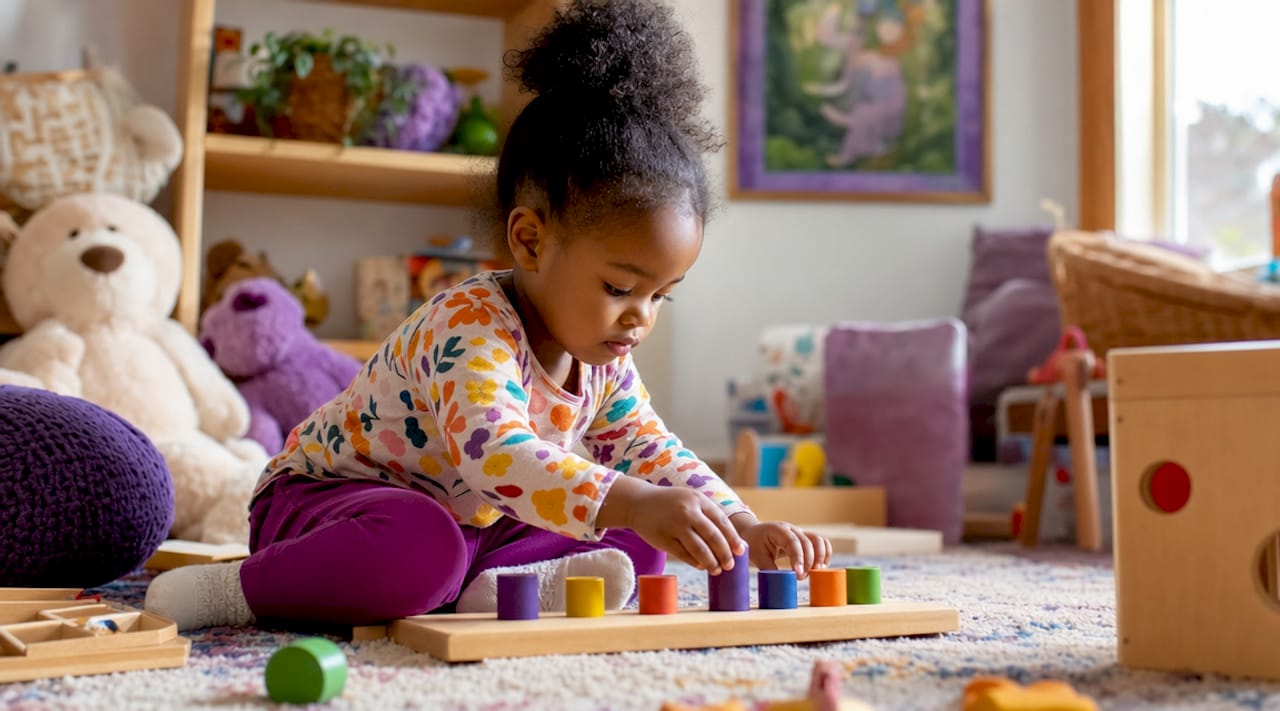
Natural materials are not just an aesthetic preference. Wood, cotton, and metal provide real sensory feedback that plastic cannot replicate. A wooden puzzle piece has weight, texture, and resistance. These physical properties create richer neural connections, which directly supports vocabulary retention in a second language. When a child handles a wooden figurine of a traditional cooking vessel while hearing its name in Hindi, the sensory experience anchors the word in memory.
Cultural authenticity is the feature most often missing from commercially marketed “bilingual” toys. Realistic figurines, tools, and images drawn from a child’s actual heritage outperform generic cartoon representations. A toy kitchen stocked with items that reflect South Asian cooking, for example, gives children a natural context for bilingual storytelling and role play.
Here is what to look for when evaluating any material:
- Single-skill focus: The material teaches one concept clearly, such as letter shape, color grading, or pouring.
- Self-correction built in: The child can see or feel when something is wrong without adult input.
- Natural materials: Wood, cotton, metal, or untreated fabric over plastic with lights or sounds.
- Cultural accuracy: Images, figurines, and narratives reflect real traditions, not stereotypes.
- Open-ended use: The material can be used in multiple ways as the child grows.
Pro Tip: Avoid anything labeled “10-in-1 STEM bilingual learning toy.” Multi-functional toys cause overstimulation and dilute skill-building. The simpler the toy, the more the child’s brain does the work.
How to build a budget-conscious early learning collection
Building a strong collection does not require spending hundreds of dollars at once. A phased approach tied to your child’s developmental stage keeps costs manageable and materials relevant.
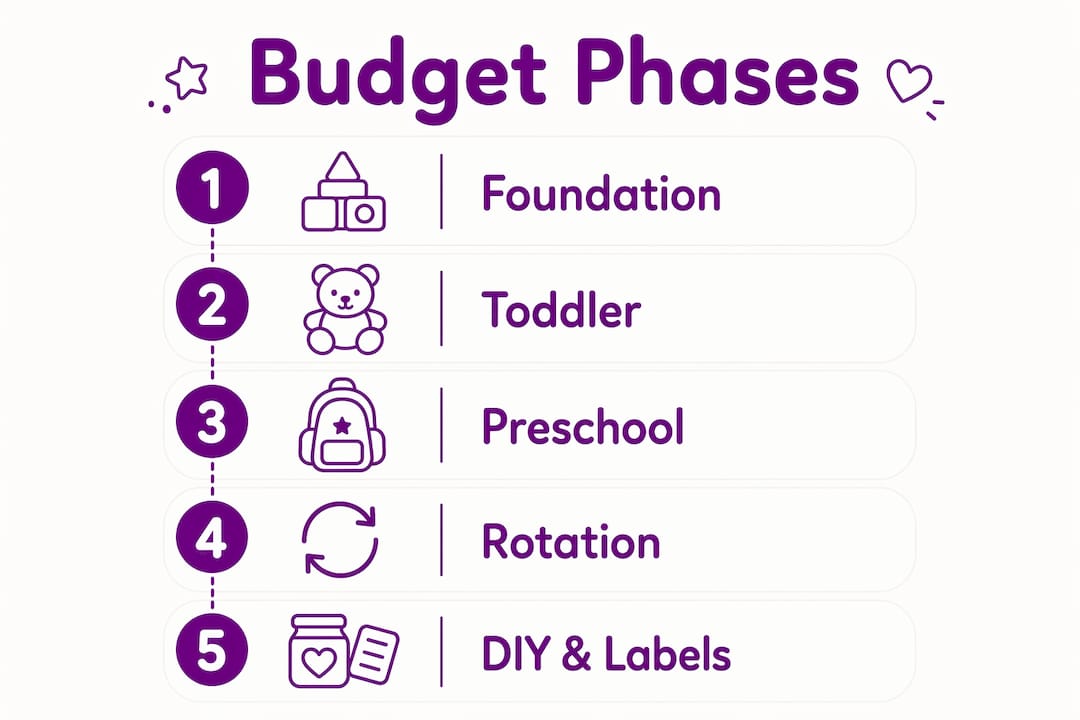
| Phase | Age Range | Budget Range | Key Items |
|---|---|---|---|
| Foundation | 0–12 months | $30–$50 | High-contrast cards, soft rattles, simple fabric books |
| Toddler | 1–3 years | $50–$100 | Stacking toys, shape sorters, board books in two languages |
| Preschool | 3–6 years | $100–$150 | Sandpaper letters, movable alphabet, cultural figurines, tracing books |
Building a home learning environment costs $30 to $50 for babies and scales to $100 to $150 for preschool sensorial and academic kits. That range is achievable without sacrificing quality if you prioritize functional materials over decorative ones.
Start with 4 to 6 materials and rotate them every one to two weeks. Rotating toys keeps learning fresh and maintains focus without overwhelming children with too many choices. A shelf with six carefully chosen items invites deeper engagement than a bin overflowing with options.
Everyday household objects are among the most powerful and affordable tools available. A small pitcher for pouring practice, a mortar and pestle for sensory exploration, or kitchen utensils labeled in both English and Punjabi cost almost nothing. Real-world items engage children more meaningfully for bilingual and cultural learning than pre-packaged toys. They also carry the weight of family tradition, which no commercial product can replicate.
Pro Tip: Before buying anything new, walk through your kitchen and label five objects in both languages. Use index cards and a marker. That five-minute activity is a legitimate bilingual learning material, and it costs nothing.
What are the best types of materials for bilingual and cultural learning?
The most effective materials for children ages 3 to 6 fall into four categories: sensorial, language, practical life, and cultural storytelling. Each category builds a different dimension of bilingual competence.
Sensorial materials develop the perceptual discrimination that underlies reading in any script. Knobbed cylinders, color grading tablets, and texture boards train the eye and hand to notice fine distinctions. This precision transfers directly to recognizing the subtle differences between Devanagari characters or Gurmukhi letters.
Language materials are the core of bilingual literacy development. Montessori approaches teach writing before reading using tactile tools like sandpaper letters and movable alphabets. Tracing and physically building letters prepares children for literacy in both languages simultaneously. For families working with scripts like Gurmukhi or Devanagari, Punjabi tracing books and similar resources bring this tactile approach to heritage language learning.
Practical life materials connect learning to cultural identity. A child-sized broom, a small rolling pin for roti, or a set of measuring cups used during cooking all become bilingual learning tools when you narrate the activity in both languages. These materials build fine motor skills, independence, and cultural familiarity at the same time.
Cultural storytelling materials include realistic figurines, culturally authentic picture books, and story books that reflect the child’s heritage. Reading a story in Hindi and then retelling it with figurines in English builds narrative fluency in both languages.
Here is a direct comparison of material types to help you choose:
| Material Type | Montessori-Style | Conventional Educational Toy |
|---|---|---|
| Sensory feedback | Wood, metal, cotton textures | Plastic, often smooth or electronic |
| Skill focus | One concept per material | Multiple skills bundled together |
| Self-correction | Built into the design | Requires adult confirmation |
| Cultural relevance | Adaptable to any tradition | Generic or Western-centric |
| Longevity | Used across multiple years | Often outgrown within months |
For art and craft supplies, choose open-ended materials: plain paper, watercolors, clay, and natural dyes. Encourage children to create images connected to their cultural stories. Narrating the creative process in both languages builds vocabulary naturally and joyfully.
How to find and purchase quality early learning materials
Knowing what to buy is only half the challenge. Knowing where to buy it, and what to avoid, saves you money and frustration.
Reputable sources for Montessori-aligned materials include Elite Montessori, Adena Montessori, and Etsy sellers who specialize in handmade wooden toys. Amazon carries a wide range, but quality varies significantly. Always check whether a product is made from natural materials and whether the seller describes a clear developmental purpose.
For digital curricula, My First School offers 12 themed volumes at $97 per level, covering a full year of development without recurring fees. Digital options work best as a supplement to physical materials, not a replacement. Screen time for children under 5 should remain limited, and any digital content should be interactive rather than passive.
Watch for these signs of poor-quality or mis-marketed materials:
- The packaging claims to teach “reading, math, science, and two languages” simultaneously.
- The toy uses flashing lights, electronic sounds, or automated responses.
- The material is made entirely of plastic with no tactile variation.
- The “bilingual” content is limited to a single audio button with a few words.
- The cultural imagery relies on stereotypes rather than realistic representation.
DIY approaches fill gaps that no commercial product can address. High-contrast cards made from black cardstock and white paint cost under $2 to make. Household items labeled in two languages using masking tape and a marker create an immersive bilingual environment. For Nepali language learning, combining a physical reading book with homemade flashcards reinforces script recognition in a way that purely digital tools cannot.
Blend physical and digital materials deliberately. Use a physical tracing book for handwriting practice, a digital curriculum for structured play themes, and real household objects for practical life and cultural connection.
Common mistakes to avoid when choosing learning materials
Even well-intentioned purchases can undermine learning if they fall into predictable traps. Here are the most common mistakes, in order of how often they derail bilingual learning at home:
- Buying overstimulating toys. A toy that lights up, plays music, and asks questions in two languages teaches nothing deeply. Toys isolating single skills build mastery far more effectively than toys trying to teach many things at once.
- Prioritizing quantity over quality. Twenty cheap plastic toys produce less learning than five well-chosen wooden ones. A cluttered shelf overwhelms children and reduces the time spent with any single material.
- Skipping the rotation system. Leaving all materials out at once kills curiosity. Rotate 4 to 6 items every one to two weeks to keep engagement high.
- Ignoring cultural specificity. A generic “world cultures” toy set does not replace materials that reflect your child’s actual heritage. Specificity builds identity.
- Over-relying on screens. Digital tools have a place, but passive screen exposure does not build the fine motor skills or tactile memory that physical materials develop.
- Choosing “aesthetic” over functional. A beautiful wooden toy that does not self-correct and has no clear developmental purpose is decoration, not a learning material. Functional materials provide physical feedback that builds independence.
Key takeaways
The most effective early childhood learning materials are simple, natural, culturally specific, and self-correcting. They focus on one skill at a time and grow with the child across the 3 to 6 age range.
| Point | Details |
|---|---|
| Prioritize single-skill materials | Focused materials build deeper mastery than multi-function toys marketed as bilingual or STEM. |
| Use a phased budget approach | Spend $30 to $150 depending on age, starting small and adding sensorial and language tools over time. |
| Rotate 4 to 6 items regularly | Swapping materials every one to two weeks sustains curiosity and deepens engagement with each item. |
| Blend physical and cultural tools | Household objects labeled bilingually and culturally authentic figurines outperform most commercial kits. |
| Choose tactile language materials | Sandpaper letters, tracing books, and movable alphabets build bilingual literacy through physical experience. |
What I’ve learned from years of watching children learn with the wrong tools
I spent a long time believing that more was better. More languages on the packaging, more features on the toy, more activities in the curriculum. What I actually observed was children who were entertained but not learning. The moment I stripped a shelf down to four simple wooden materials and one tracing book in a heritage script, the quality of engagement changed completely.
The most counterintuitive truth in early childhood education is this: the less a toy does, the more a child learns. Simple, open-ended materials require the child to be the author of the experience. That authorship is where language acquisition and cultural identity actually take root.
Parents often feel pressure to prove their commitment to bilingualism through elaborate purchases. I understand that impulse. But a child who spends twenty minutes tracing Gurmukhi letters in a reusable book, then narrates what they drew to a parent in both languages, has done more meaningful bilingual work than a child who tapped through a bilingual app for an hour. The physical act of writing in a heritage script is an act of cultural belonging. That is worth protecting.
My honest advice: start with your kitchen, your stories, and one good tracing book. Build from there with intention, not anxiety.
— Bobby
Bring bilingual learning to life with Littlepumpkins
If you are ready to put this guide into practice, Littlepumpkins makes it easy to start with one magical tool.
Littlepumpkins’ bilingual tracing and writing books use reusable magic ink technology so children ages 3 to 6 can trace letters in Punjabi, Hindi, Nepali, Gujarati, and English again and again without wasting paper. Each book pairs engaging illustrations with tactile letter practice, making heritage script learning feel like play rather than homework. Parents report that children who resisted writing tasks became eager to pick up the magic pen. Explore the full range of learning tools and story books at Littlepumpkins and find the right fit for your child’s language journey.
FAQ
What is the best age to start bilingual learning materials?
Children ages 3 to 6 are in a critical window for language acquisition, making this the ideal time to introduce structured bilingual materials. Sensorial and tracing tools work particularly well at this stage because they combine physical learning with language exposure.
How many learning materials does a preschooler need at one time?
Four to six materials accessible at any one time is the recommended range. Rotating this selection every one to two weeks keeps children engaged and allows deeper focus on each item.
Are Montessori materials worth the cost for bilingual learning?
Quality Montessori-style materials last for years and serve multiple developmental purposes, making them more cost-effective than cheaper toys replaced frequently. A preschool sensorial and language kit costs $100 to $150 and covers multiple years of use.
Can I make bilingual learning materials at home?
Yes. Household objects labeled in two languages, homemade high-contrast cards, and kitchen tools used during cooking are all effective bilingual learning materials. DIY approaches often outperform commercial kits for cultural relevance and long-term retention.
What should I avoid when buying preschool learning tools?
Avoid toys that bundle multiple skills, use electronic sounds or lights, or make vague “bilingual” claims without specific language content. Single-skill, natural-material tools with self-correcting features deliver the strongest developmental outcomes for children ages 3 to 6.