


Educational Books for Toddlers: Benefits That Last a Lifetime
Educational books for toddlers are the single most accessible tool parents have for building early literacy, language skills, and emotional intelligence before kindergarten. Up to 50% of U.S. children enter kindergarten without the fundamental language skills needed for reading. That gap starts closing the moment you open a book with your child. The educational books for toddlers benefits extend far beyond learning letters. They shape how your child thinks, feels, and connects with the world around them.
1. How educational books build early language skills
Language development is the most well-documented benefit of reading to toddlers. Books expose children to vocabulary and complex grammar that simply does not appear in everyday conversation. A parent might say “Let’s go outside.” A picture book says “The curious fox crept silently through the rustling autumn leaves.” That difference in language richness builds the neurological groundwork for advanced reading and communication.
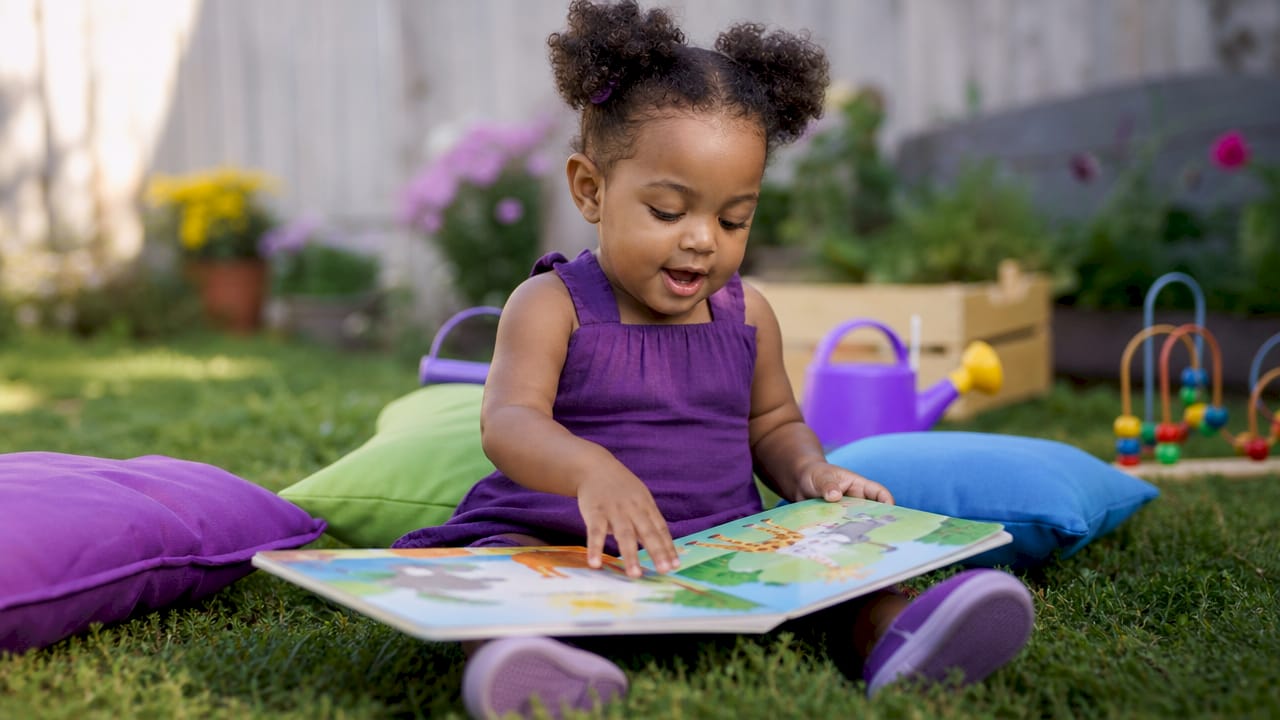
A meta-analysis of 20 studies found that picture books moderately improve early literacy, language, and vocabulary outcomes, with an effect size of 0.71. An effect size above 0.5 is considered meaningful in educational research. That means picture books are not just nice to have. They are a proven tool for language growth.
Key ways toddler learning books build language skills:
- Vocabulary exposure: Books introduce words like “enormous,” “whisper,” and “gentle” that rarely come up in daily talk.
- Grammar patterns: Repeated sentence structures in books teach toddlers how language is organized.
- Phonological awareness: Rhyming books train ears to hear the sounds that make up words, a core pre-reading skill.
- Narrative comprehension: Stories teach children how events connect, which supports reading comprehension later.
Pro Tip: Read illustrated books that pair vivid pictures with descriptive words. Point to the image as you say the word. That visual-verbal pairing accelerates vocabulary retention in toddlers aged 2–5.
2. Bilingual language development through books
Books are one of the most effective tools for raising bilingual children. Naming objects in both languages during reading and repeating those labels across sessions builds strong bilingual word mapping in toddlers. The brain stores language in overlapping networks, and early exposure in two languages strengthens both.
You do not need a bilingual book to support bilingual learning. Point to a dog on the page and say “dog” in English, then say the word in Punjabi or Hindi. That simple act, repeated across dozens of sessions, creates durable connections. Dedicated bilingual learning materials accelerate this process by building the labeling directly into the book’s design.
Littlepumpkins produces reusable magic ink tracing books in Hindi and Punjabi, designed for children aged 3–6. The books combine letter tracing with illustrated vocabulary, so children practice writing and reading in their heritage language at the same time. Parents report significant improvements in children’s willingness to engage with writing tasks after using these books consistently.
3. Social-emotional growth from shared reading
Reading with your toddler is not just an academic activity. It is one of the most powerful bonding experiences available to parents and caregivers. Toddlers mimic caregivers’ emotional expressions during reading, which aids brain development and builds social-emotional awareness. When you widen your eyes at a surprising plot twist or soften your voice during a sad moment, your child is learning how to read emotions.
Just two weeks of daily 15-minute bedtime reading improved cognitive empathy and creative thinking in toddlers. Two weeks. That is a remarkably short time to see measurable social gains. The research also found it did not matter whether parents stopped to ask questions or read straight through. Both approaches improved outcomes equally.
“Caregiver emotional engagement during reading prompts toddlers to mimic sounds and expressions, directly boosting brain development and social awareness.”
Benefits for social-emotional development include:
- Empathy building: Stories let children experience emotions from another character’s perspective.
- Emotional vocabulary: Books name feelings like “frustrated,” “nervous,” and “proud,” giving toddlers words for their inner world.
- Secure attachment: Consistent shared reading creates predictable, warm routines that strengthen the caregiver-child bond.
- Conflict resolution: Stories model how characters work through problems, giving toddlers a mental script for real-life situations.
4. Cognitive development and creative thinking
Educational reading for kids does more than teach facts. It builds the mental architecture for thinking, imagining, and problem-solving. When a toddler follows a story, their brain is tracking characters, predicting outcomes, and holding multiple ideas at once. These are the same cognitive skills used in math, science, and writing years later.
Creative thinking specifically benefits from consistent reading routines. Children who hear stories regularly develop stronger imaginative play, which researchers link to flexible thinking and problem-solving ability. The impact of reading on toddlers’ cognitive growth compounds over time. A child who hears thousands of stories before age 5 enters school with a mental library of narrative structures, vocabulary, and ideas.
Picture books with open-ended illustrations are especially effective. When a page shows a character looking at a closed door, your child’s brain fills in what might be behind it. That mental exercise, repeated across hundreds of books, trains creative cognition in a way that screens and passive media simply do not.
5. School readiness and pre-literacy skills
The best books for early development do something specific: they build pre-reading skills before a child ever touches a phonics workbook. Pre-reading skills include print awareness, letter recognition, phonological awareness, and narrative understanding. Books build all four simultaneously.
Here is how a consistent reading routine prepares toddlers for kindergarten:
- Print awareness: Pointing to words as you read teaches children that text moves left to right and carries meaning.
- Letter recognition: Seeing letters repeatedly in context accelerates letter recognition before formal instruction begins.
- Phonological awareness: Rhyming books and alliterative text train children to hear and manipulate sounds in words.
- Narrative structure: Understanding that stories have a beginning, middle, and end prepares children for reading comprehension tasks.
- Attention and focus: Sitting through a story, even a short one, builds the concentration muscles needed for classroom learning.
Pro Tip: Pair books with writing readiness activities like tracing letters from a favorite book’s title. The connection between a beloved story and the act of writing makes practice feel purposeful rather than tedious.
Establishing consistent daily reading routines creates a safe, predictable environment that boosts emotion regulation and builds positive attitudes toward learning. Children who associate books with warmth and safety become children who want to read.
6. How to choose the right books for your toddler
Not all toddler learning books deliver the same benefits. Age-appropriate content, interactive features, and cultural relevance all affect how much a child engages and retains.
| Feature | Why it matters | Best for ages |
|---|---|---|
| Board book format | Durable pages toddlers can handle independently | 1–3 years |
| Repetitive text | Builds memory, prediction, and language patterns | 2–4 years |
| Interactive elements (flaps, textures) | Keeps attention and reinforces tactile learning | 1–4 years |
| Bilingual labeling | Supports dual-language word mapping through repetition | 2–5 years |
| Tracing or activity pages | Connects reading with early writing practice | 3–6 years |
When selecting books, prioritize these features:
- Short, focused text: Toddlers aged 2–3 engage best with books that have 1–3 sentences per page.
- Bold, clear illustrations: Images should directly match the text to reinforce vocabulary.
- Cultural representation: Children connect more deeply with books that reflect their family’s heritage and language.
- Reusability: Books with activity elements, like tracing pages, extend the value of each reading session.
Toddlers benefit from following their lead during reading. Let them flip pages, point at pictures, or revisit a favorite spread. That kind of self-directed engagement builds positive associations with books that last well into childhood.
Key takeaways
Educational books for toddlers build language, empathy, cognitive skills, and school readiness simultaneously, making daily reading the highest-return habit a parent can establish before kindergarten.
| Point | Details |
|---|---|
| Language development | Books expose toddlers to vocabulary and grammar far richer than everyday speech. |
| Bilingual learning | Naming objects in two languages during reading builds durable dual-language word maps. |
| Social-emotional growth | Just two weeks of daily 15-minute reading measurably improves empathy and creative thinking. |
| School readiness | Consistent reading builds print awareness, letter recognition, and focus before formal schooling. |
| Book selection matters | Age-appropriate, interactive, and culturally relevant books maximize engagement and retention. |
Reading with toddlers: what actually works in practice
The research on educational books is clear. The practice is messier, and that is okay.
I have watched parents abandon reading routines because their toddler kept jumping up, grabbing the book, or demanding the same page over and over. Here is what I have learned: that behavior is not a problem. It is the point. Toddlers do not need to sit still to benefit from reading. Following their lead, letting them flip back to the page with the dog, or letting them hold the book upside down, keeps the experience positive. Positive associations with books are the whole game at this age.
The parents I have seen get the best results are not the ones who read perfectly. They are the ones who read consistently. Ten minutes before bed, five minutes at breakfast, a quick book in the car. The routine matters more than the duration or the technique. Research confirms that asking questions and reading straight through produce equal social benefits. So stop worrying about doing it right and just do it.
One more thing: repeated readings are not a failure of variety. They are a feature. When a toddler asks for the same book for the fifteenth time, their brain is deepening vocabulary connections, reinforcing narrative structure, and enjoying the comfort of prediction. Let them have it.
— Bobby
Littlepumpkins books for early literacy and bilingual learning
Reading builds the foundation. Writing reinforces it. Littlepumpkins connects both in one place.
Littlepumpkins creates reusable magic ink tracing books designed for children aged 3–6. Each book combines illustrated vocabulary with letter tracing in English, Hindi, or Punjabi, so your child practices reading and writing in the same session. The magic ink technology means pages reset completely, giving toddlers unlimited practice without wasted paper. If you are building a bilingual reading routine at home, the Hindi and English tracing books are a natural complement to the picture books already on your shelf. Browse the full range of learning tools for toddlers and find the right fit for your child’s stage.
FAQ
What are the main educational books for toddlers benefits?
Educational books for toddlers build vocabulary, language structure, empathy, cognitive skills, and pre-reading abilities. These benefits compound over time, with children who read daily entering kindergarten significantly better prepared.
How do books help toddlers learn a second language?
Pointing to objects and naming them in both languages during reading builds bilingual word mapping in toddlers. Repetition across multiple sessions strengthens those connections regardless of the book’s original language.
How long should I read to my toddler each day?
Research shows that just 15 minutes of daily reading produces measurable gains in empathy and creative thinking within two weeks. Consistency matters more than session length.
Do toddlers need to sit still during reading to benefit?
Toddlers do not need to sit still to benefit from books. Following their lead, whether they flip pages, point at pictures, or move around, maintains positive associations with reading that support long-term literacy habits.
When should I start reading educational books to my child?
Reading benefits begin from infancy. For structured educational books with tracing and vocabulary activities, ages 3–6 are the most effective window for building early literacy and bilingual writing skills.