


How Children Learn to Write for Beginners: A Parent's Guide
Emergent writing is defined as the natural, developmental process through which young children move from scribbling to producing meaningful text. Understanding how children learn to write for beginners starts with recognizing that this process is not a single skill but a coordinated progression involving motor control, phonological awareness, and the drive to communicate. Every child follows a unique path, and that path rarely moves in a straight line. For parents and educators working with bilingual or multicultural learners, tools like tracing books, drawing journals, and culturally relevant writing activities make this journey richer and more meaningful.
What are the stages of emergent writing in young children?
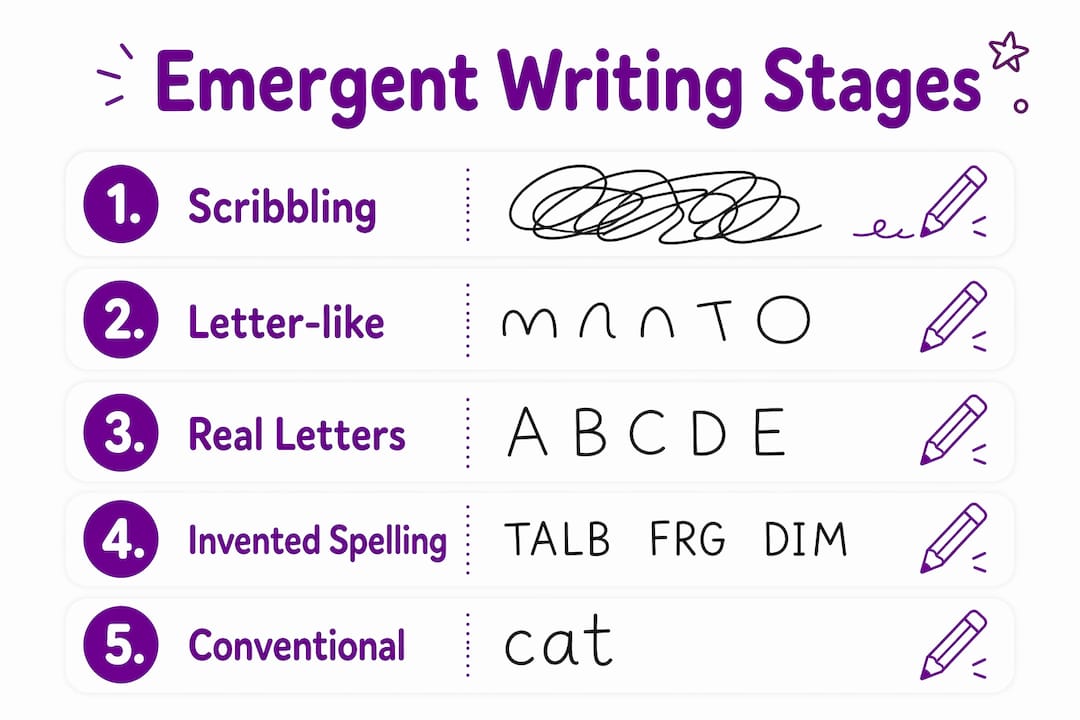
Emergent writing develops through stages starting from scribbles and progressing toward conventional writing, with each child’s progression being unique and non-linear. Knowing these stages helps you respond to where your child actually is, not where you think they should be.
Stage 1: Scribbling and mark-making
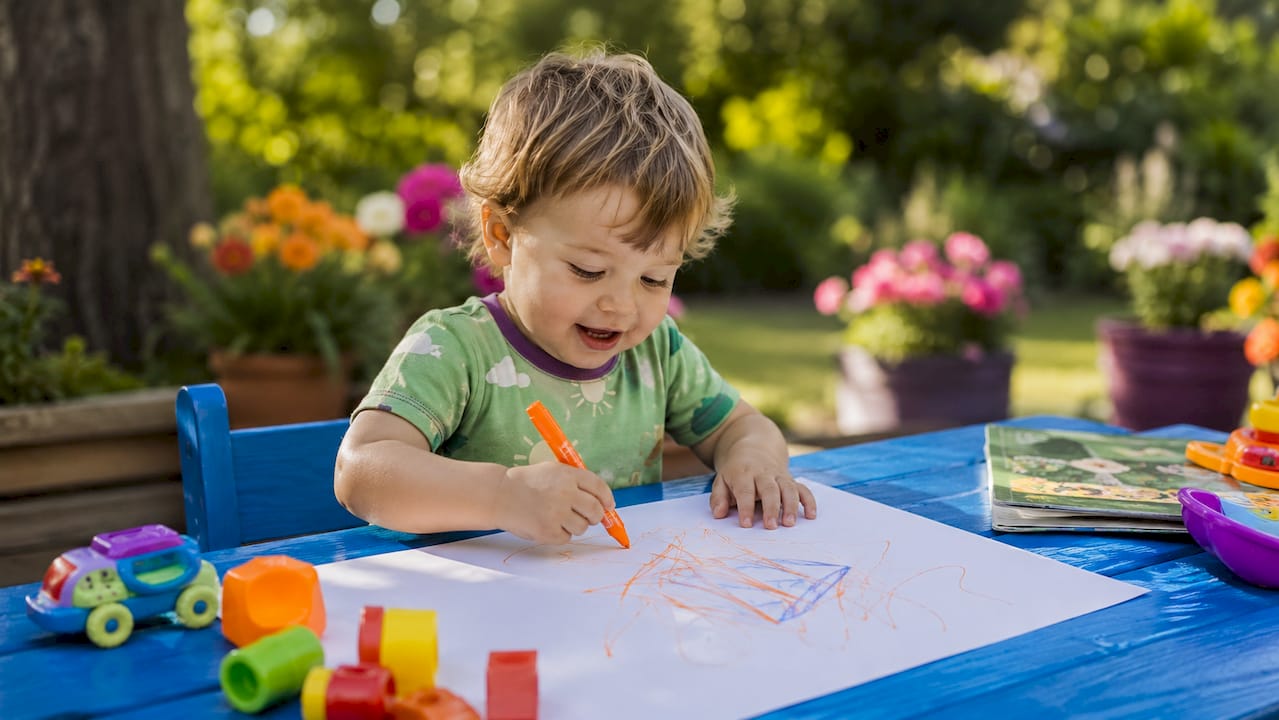
Children begin by making marks on paper with no clear letter intent. These scribbles are not random. They represent a child’s first understanding that marks carry meaning, which is the foundation of all writing.
Stage 2: Letter-like forms
Children start producing shapes that resemble letters but are not yet real ones. They are experimenting with the visual features of print, like lines, curves, and angles.
Stage 3: Real letters appear
Children begin using actual letters, often pulled from their own name or words they see in their environment. Name writing is one of the most powerful early milestones because it connects identity to print.
Stage 4: Invented spelling
Children start mapping sounds to letters, producing spellings like “KT” for “cat.” This reflects growing phonological awareness and is a sign of real cognitive progress, not a mistake to correct.
Stage 5: Conventional writing
Children begin using standard spelling, spacing, and punctuation. This stage typically emerges in kindergarten through early elementary school.
| Stage | What it looks like | What it means |
|---|---|---|
| Scribbling | Random marks and lines | Child understands marks carry meaning |
| Letter-like forms | Shapes resembling letters | Experimenting with print features |
| Real letters | Letters from name or environment | Connecting identity and print |
| Invented spelling | Phonetic approximations like “KT” | Phonological awareness developing |
| Conventional writing | Standard spelling and punctuation | Formal writing skills emerging |
Pro Tip: Never correct invented spelling harshly. Phonetic approximations show a child is actively thinking about sound-letter relationships. Celebrate the attempt, then gently model the standard form.
How do educators and parents support early writing development?
The gradual release of responsibility model is the most effective framework for teaching early writing. It moves from adult modeling to shared writing to independent writing, reducing cognitive overload at each step. This scaffolding approach, rooted in the work of educational theorist Jerome Bruner, gives children the support they need before they write alone.
Here are the most effective strategies for parents and educators:
-
Model writing out loud. Sit with your child and narrate what you write. Say, “I’m going to write ‘milk’ on our grocery list. Watch how I make the letter M.” This think-aloud approach makes the invisible process of writing visible.
-
Use shared writing. Write together, with the adult holding the pen but taking the child’s ideas. Ask, “What should we write?” then say each word slowly as you write it. This builds the connection between spoken and written language.
-
Offer contextual prompts. Research shows children are 66% more likely to adhere to writing tasks when given a contextual prompt rather than an abstract one. “Draw and write about your birthday” works far better than “Write a sentence.”
-
Start with name writing. Educators scaffold name writing as a first formal writing task because it combines motivation, familiarity, and letter formation in one activity. Your child’s name is the most meaningful word they know.
-
Combine drawing and writing. Let children draw first, then add words or letters. This multimodal approach honors how young children naturally communicate and builds toward text-based writing gradually.
-
Create real writing scenarios. Grocery lists, birthday cards, and story captions give writing a purpose. Children write more willingly when the task feels real, not like a drill.
Pro Tip: Check out these writing readiness activities from Littlepumpkins for practical, play-based ideas you can use at home today.
Why does cultural context matter for bilingual learners?
Multimodality is central to how bilingual and multicultural children express meaning in writing. A 2025 U.S. study found that multilingual kindergarteners use drawings most prominently to convey meaning, particularly children with lower English proficiency. Those drawings increase narrative complexity and cohesion, even when drawing was not explicitly requested. This means a drawing is not a fallback. It is part of the writing system itself.
Here is what this looks like in practice for parents and educators:
- Treat drawings as writing. When a child draws a scene and adds a few letters, ask them to tell you about it. Then write their words beside the drawing. This co-construction of print respects the child’s meaning-making and builds the bridge to text.
- Value home languages. Children who write or speak in Punjabi, Hindi, Spanish, or any other home language are not behind. They are building a richer linguistic foundation. Encourage writing in any language the child chooses.
- Use culturally relevant prompts. Ask children to write about family celebrations, traditional foods, or stories from home. Familiar contexts produce more engaged, detailed writing.
- Integrate phonological awareness gently. For bilingual learners, sound-letter mapping is a key bridge between spoken and written language. Guide children to hear the sounds in words they already know in their home language, then connect those sounds to letters.
- Avoid over-correcting phonetic spelling. Research supports guiding spelling development without penalizing phonetic approximations, especially for children navigating two or more sound systems at once.
Early literacy materials designed for bilingual children make a real difference when they reflect the child’s actual linguistic world.
What are the best beginner writing activities for kids?
Effective early writing instruction integrates code-related skills like alphabet knowledge and phonics with meaning-related skills like storytelling and verbal expression. The best activities build both at the same time. Here are the most effective options for parents and educators:
- Tracing books. Tracing letter forms builds the fine motor control children need before they can write independently. Look for tracing tools for literacy that cover both print and script forms.
- Drawing journals. Give children a blank journal and a prompt each day. “Draw your favorite animal and write its name” combines drawing, phonics, and vocabulary in one low-pressure activity.
- Play-based writing. Set up a pretend post office, restaurant, or grocery store. Children write orders, signs, and letters naturally in play contexts. Play-based learning consistently improves writing motivation in early learners.
- Alphabet games. Matching letter tiles to pictures, stamping letters in sand, or forming letters with clay all reinforce letter recognition without a pencil and paper.
- Story retelling. Read a short book, then ask your child to draw and write what happened. Story retelling builds narrative structure, vocabulary, and writing stamina together.
| Activity | Best for | Age range |
|---|---|---|
| Tracing books | Motor control and letter formation | 3–6 years |
| Drawing journals | Multimodal expression and vocabulary | 3–5 years |
| Play-based writing | Motivation and real-world context | 3–6 years |
| Alphabet games | Letter recognition and phonics | 3–5 years |
| Story retelling | Narrative structure and writing stamina | 4–6 years |
Check the writing developmental milestones guide from Littlepumpkins to track where your child is and what to try next.
Key Takeaways
Teaching beginner writing skills requires matching activities to each child’s developmental stage, using scaffolded support, and honoring every form of meaning-making, including drawing, invented spelling, and home languages.
| Point | Details |
|---|---|
| Writing is developmental | Children progress through five stages from scribbling to conventional writing, non-linearly. |
| Scaffolding drives progress | The gradual release model, from modeling to shared to independent writing, reduces overload. |
| Context boosts engagement | Contextual prompts increase task adherence significantly more than abstract writing tasks. |
| Drawings are writing | For bilingual learners, drawings increase narrative complexity and are part of the writing system. |
| Cultural relevance matters | Integrating home languages and familiar contexts produces more engaged and detailed writing. |
What I’ve learned from watching children write their first letters
Most adults remember learning to write as a formal, corrective experience. Red pen on paper. Neatness above all. That model gets it backwards. Writing instruction for young children should prioritize communication and meaning over neat handwriting, especially in the earliest stages. A child who scribbles a “letter” to grandma and reads it back to you with full confidence is already a writer. The marks on the page are secondary to the intention behind them.
What I find most striking in current research is how much bilingual children bring to the page that adults often overlook. A drawing of a family dinner is not a distraction from writing. It is writing, expressed in the mode that child has mastered. When educators and parents respond to that drawing by asking “Tell me about this,” and then writing the child’s words beside the image, something powerful happens. The child sees their spoken language become print. That moment is worth more than a hundred handwriting drills.
The hardest part of supporting beginner writing skills is patience with the pace. Every child I have observed moves through these stages differently. Some children write their name at age three. Others are still in the scribbling stage at five, and that is within the normal range. The worst thing you can do is rush the process or compare one child to another. The best thing you can do is keep writing visible, keep it meaningful, and keep it joyful.
For parents raising children in bilingual or multicultural homes, the opportunity is even richer. You are not teaching one writing system. You are teaching a child that their whole linguistic world has value. That message shapes how they approach learning for the rest of their lives.
— Bobby
Writing tools that make practice feel magical
Littlepumpkins designs learning tools specifically for young children who are building their first writing skills, including those learning in more than one language.
Their writing books for kids use reusable magic ink technology, so children aged 3 to 6 can trace letters in English, Hindi, Punjabi, and more, again and again without wasting paper. The magic ink element turns repetitive practice into something children actually ask to do. Littlepumpkins also offers drawing books for toddlers that support the multimodal, drawing-first approach that research backs for bilingual learners. If you want to build a writing practice at home that feels like play, these tools are a natural place to start.
FAQ
What is emergent writing in early childhood?
Emergent writing is the developmental process through which children move from scribbling to producing meaningful text. It begins before formal schooling and includes drawing, mark-making, and invented spelling as valid early forms of written communication.
At what age do children start learning to write?
Most children begin making intentional marks between ages 2 and 3. Letter formation and name writing typically emerge between ages 3 and 5, though the timeline varies widely for each child.
How do I help a bilingual child learn to write?
Treat drawings as meaningful writing, use prompts connected to the child’s home culture, and encourage writing in any language the child chooses. Research shows that phonological awareness in the home language directly supports sound-letter mapping in a second language.
Should I correct my child’s spelling mistakes?
Phonetic spelling like “wuz” for “was” shows active thinking about sounds and letters. Model the correct form naturally without criticism, and avoid marking errors as failures. Over-correction reduces writing confidence and motivation.
What writing activities work best for beginners?
Tracing books, drawing journals, play-based writing scenarios like pretend grocery lists, and story retelling activities all build foundational skills. Activities tied to real, meaningful contexts produce the highest engagement in children aged 3–6.