


How Early Writing Connects to Reading Development
Early writing is defined as a direct pathway into reading development, not a separate skill that follows after reading is mastered. Research confirms that reading and writing share the same core cognitive processes, including phonological awareness, vocabulary, and syntax. A 2026 longitudinal study of 261 students found a correlation of .82 between reading comprehension and written composition. That number is striking. It means children who write more tend to read better, and the relationship runs in both directions. Understanding how early writing connects to reading development gives parents and educators a powerful lens for building stronger literacy from the very start.
How early writing connects to reading development: what the research shows
Reading and writing are not two separate subjects. Researchers Timothy Shanahan and Jill Fitzgerald describe them as “two buckets dipping from the same well,” sharing core cognitive resources and benefiting from connected instruction. That framing captures something most traditional literacy programs miss.
The evidence behind this connection is strong. The .82 correlation between reading comprehension and writing composition, confirmed in a 2026 longitudinal study, reflects a relationship that holds across grade levels and student populations. A correlation that high tells you these two skills are not just related. They are deeply intertwined.
Spelling instruction is one of the clearest examples. Explicit spelling instruction produces an effect size of 1.52 on word reading in individualized settings. An effect size above 0.8 is considered large in educational research. An effect size of 1.52 is exceptional. Teaching a child to spell a word does not just help them write it. It helps them read it faster and more accurately.
“Writing is an active learning tool that strengthens reading strategies by forcing vocabulary and text organization processing.” — Steve Graham, literacy researcher
Meta-analyses of K–3 literacy instruction reinforce this point. Integrated reading and writing instruction produces effect sizes of 0.57 to 0.63 for improvements in writing quality when reading instruction is included. That is a meaningful gain from simply connecting the two activities rather than teaching them in isolation.
Transcription automaticity is another key factor. When handwriting is slow and labored, a child’s working memory fills up with the mechanics of forming letters. That leaves less mental space for comprehension, vocabulary, and meaning. Fast, accurate handwriting frees up cognitive capacity for higher-level thinking in both writing and reading.
What early writing activities build in young children
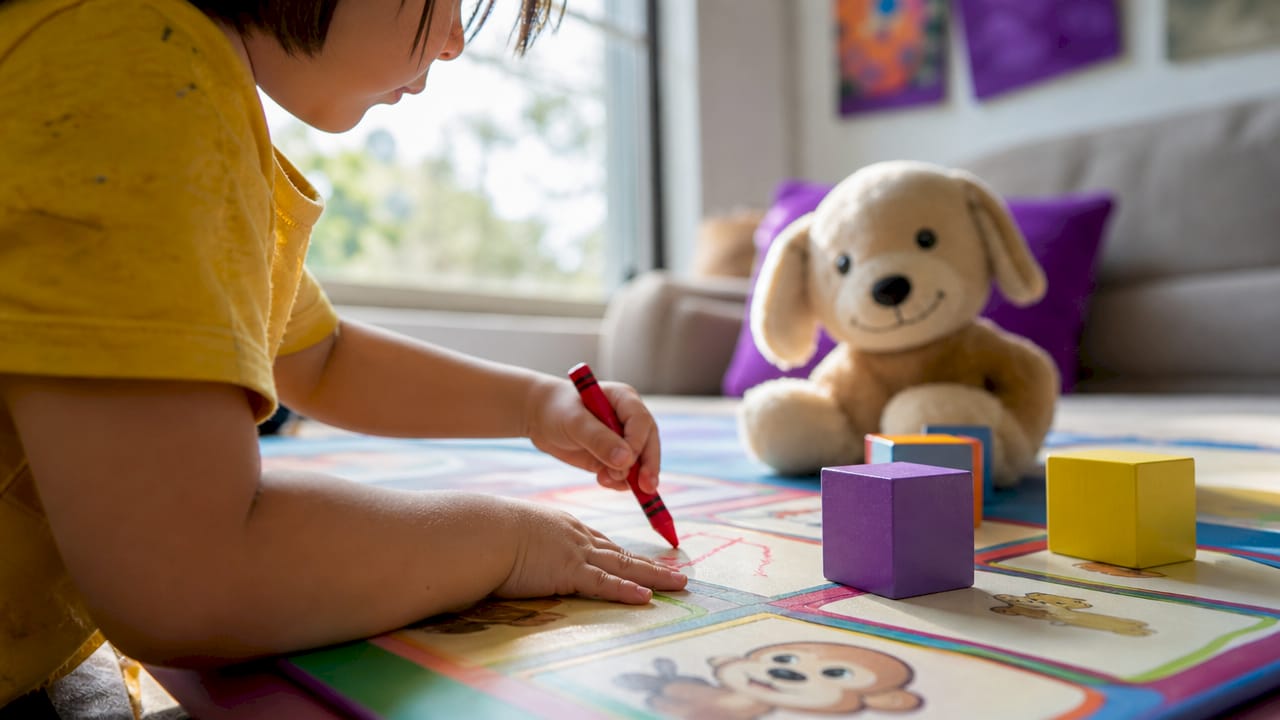
The literacy skills that support reading begin forming well before a child picks up a pencil to write a real word. Activities like talking, drawing, singing, and scribbling build essential brain connections for language and reading comprehension in children ages 3–6. These are not pre-literacy warm-ups. They are literacy development in action.
Here are the specific skills that early writing activities build:
- Phonological awareness. When children attempt to write words, they must break them into sounds. That process directly strengthens the decoding skills needed for reading.
- Letter-sound knowledge. Practicing consonant-vowel-consonant (CVC) words like “cat” or “sun” connects spoken sounds to printed symbols in both directions.
- Vocabulary. Writing about experiences forces children to retrieve and use words, deepening their understanding of those words when they encounter them in reading.
- Print concepts. Writing teaches children that print moves left to right, that spaces separate words, and that letters represent sounds. These concepts are foundational for reading fluency.
- Fine motor fluency. Tracing and forming letters builds the muscle memory that makes handwriting automatic, freeing mental energy for comprehension.
Invented spelling is a normal and critical stage in this process. When a child writes “kat” instead of “cat,” they are demonstrating active phonological reasoning. That is not an error to correct harshly. It is evidence of a child applying sound-letter knowledge, which is exactly the same skill used in reading decoding.
Pro Tip: When a child shows you their invented spelling, ask them to read it back to you. That one step reinforces the sound-to-print connection in both directions and builds enormous confidence.
Parents can support early literacy activities starting at age 3 by making writing part of play, not a formal lesson.
Why integrated reading and writing instruction works best
Reading and writing share three core language systems: phonology (sounds), vocabulary (word meaning), and syntax (sentence structure). When you teach them together, children get double the practice with each system. When you teach them separately, you cut that benefit in half.
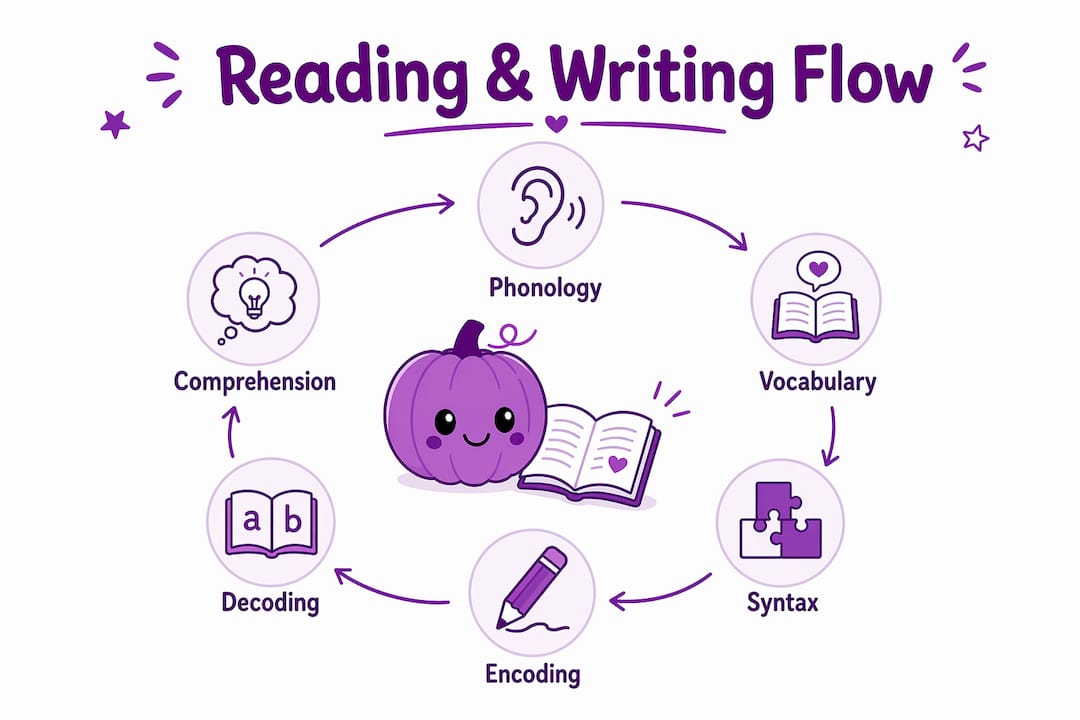
The cognitive explanation is straightforward. Encoding (writing a word) and decoding (reading a word) use the same neural pathways. Practicing one strengthens the other. Phonological awareness built through writing directly improves reading decoding. Reading a wide range of texts improves writing vocabulary and sentence structure.
Writing about what children read is one of the most effective integrated tasks available. Writing about reading deepens comprehension by requiring children to identify and clarify the most important ideas in a text. A child who writes two sentences about a story they just read has processed that story at a deeper level than a child who simply answered a yes-or-no question about it.
Daily integration of reading and writing practice leads to stronger literacy growth than teaching the skills separately. This is not a minor difference in outcomes. It reflects a fundamentally more efficient use of instructional time.
Pro Tip: After reading a picture book together, ask your child to draw one thing that happened and write a word or sentence about it. This simple task connects reading comprehension to writing practice in under five minutes.
Practical strategies for parents and educators
Applying the research does not require a formal curriculum overhaul. Small, consistent practices at home and in the classroom make a real difference in how writing influences literacy growth.
- Start with low-pressure writing tasks. Labels on drawings, grocery lists, and name tags all count as writing. These tasks build print awareness and letter formation without the pressure of a formal assignment.
- Celebrate invented spelling. Praising effort and phonological reasoning rather than correcting every misspelling builds confidence and keeps children writing. Confidence is what keeps the practice going.
- Use quick writes after reading. A quick write is a one to three minute writing response to something just read. Quick writes serve as low-stakes tools to assess comprehension and deepen understanding at the same time.
- Practice handwriting fluency alongside phonics. Fluent handwriting frees cognitive capacity so children can focus on meaning rather than mechanics. Tracing activities and letter formation practice are not busywork. They are foundational.
- Align home and classroom supports. Ask your child’s teacher what writing activities they are doing in class. Reinforcing the same letter patterns or word families at home multiplies the effect of classroom instruction.
- Write before reading is mastered. Writing activities should start early with communicative, low-pressure tasks rather than waiting for reading fluency. Writing supports reading development. It does not wait for it.
Understanding writing developmental milestones helps parents set realistic expectations and celebrate the right moments.
Key Takeaways
Early writing and reading develop together through shared cognitive processes, and integrated practice produces measurably stronger literacy outcomes than teaching either skill alone.
| Point | Details |
|---|---|
| Writing and reading share core skills | Phonological awareness, vocabulary, and syntax are built by both activities simultaneously. |
| Spelling instruction boosts reading | Explicit spelling instruction produces an effect size of 1.52 on word reading in individualized settings. |
| Invented spelling is progress | Children using invented spelling are actively applying sound-letter knowledge, the same skill used in reading decoding. |
| Handwriting fluency matters | Fast, accurate handwriting frees working memory for comprehension and higher-level thinking. |
| Integration beats isolation | Daily combined reading and writing practice leads to stronger literacy growth than teaching each skill separately. |
Writing and reading are not a sequence. They are a system.
Here is what I have seen repeatedly: parents and educators treat reading as the first goal and writing as something that comes after. The child learns to read, then learns to write. That sequence feels logical. It is also wrong, and it costs children months of literacy development.
Reading and writing co-develop. A child who scribbles a message at age 3 is not playing. They are building the same phonological awareness that will help them decode words at age 5. When we wait for reading mastery before encouraging writing, we remove one of the most powerful tools available for building reading skills in the first place.
The other thing I want to push back on is the fear of invented spelling. I understand the instinct to correct it. You want your child to learn the right way. But correcting every misspelling in a child’s early writing does one thing reliably: it makes them write less. A child who writes less builds fewer phonological connections, less print awareness, and less confidence. Celebrating the attempt, even when “dog” comes out as “dg,” keeps the engine running.
The most effective thing you can do is treat literacy as one unified system. Read together, write together, and connect the two as often as possible. The research is clear. The results follow.
— Bobby
Littlepumpkins writing tools that support early literacy
Children learn best when writing feels like play, not practice. Littlepumpkins designs writing books for kids that use reusable magic ink technology, letting children aged 3 to 6 trace letters again and again without wasting paper. Each book builds the handwriting fluency that research links directly to stronger reading comprehension.
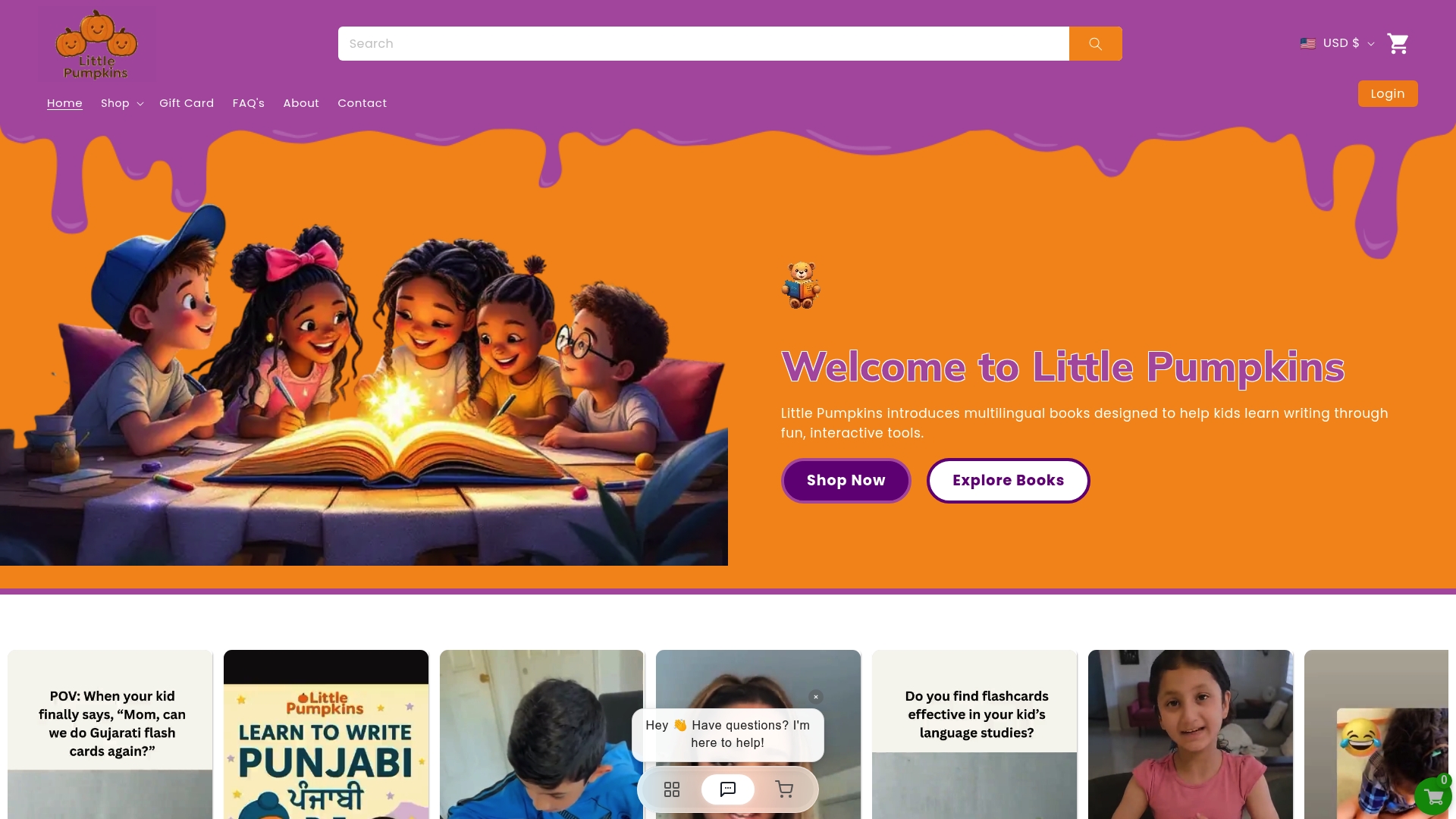
Littlepumpkins offers tracing books in English, Hindi, and Punjabi, so children can build letter formation skills across multiple languages at once. The engaging illustrations make each session feel like an adventure rather than a lesson. Parents and educators who want tools that align with research-backed literacy development will find the full collection at Littlepumpkins, one magical letter at a time.
FAQ
Does writing help children learn to read faster?
Writing directly supports reading speed by building phonological awareness and letter-sound knowledge through the encoding process. Children who write regularly tend to decode words more accurately and fluently.
What age should children start writing activities?
Children can begin low-pressure writing activities like drawing, scribbling, and tracing as early as age 3. Writing development starts before reading mastery and actively supports it.
Is invented spelling a problem to fix?
Invented spelling is a positive developmental sign, not an error. It shows a child is actively applying sound-letter knowledge, which is the same cognitive skill used in reading decoding.
How does handwriting practice connect to reading comprehension?
Fluent handwriting reduces the cognitive load of forming letters, freeing working memory for comprehension and meaning. Children with automatic handwriting show stronger reading comprehension than those who write slowly.
What is the most effective way to connect writing and reading at home?
Ask your child to draw or write one sentence about a book you just read together. This quick write task deepens comprehension and reinforces the sound-to-print connection in both directions.