


How Illustrated Cultural Books Spark Conversations
Illustrated cultural books are defined as picture books that use art, story, and cultural symbols together to help young children connect with heritage, language, and identity. Understanding how illustrated cultural books spark conversations is the first step toward using them well at home or in the classroom. A 2026 meta-analysis found that picture books produce a moderate positive effect (Hedges’ g = 0.71) on vocabulary and language development across 2,145 children. That number tells you these books are not just enjoyable. They are among the most effective early learning tools available to parents and educators today.
How illustrated cultural books spark conversations through art and story
Illustrations do more than decorate a page. They carry a parallel narrative that text alone cannot deliver. Illustrations often embed hidden details and cultural symbols that extend storytelling beyond the written words, giving caregivers and children something to discover together on every reading. That discovery process is exactly what opens a conversation.
When a child points at a sari, a drum, or a familiar festival food in an illustration, they are not just recognizing an image. They are connecting a visual cue to lived experience, memory, or family story. That connection pulls words out of children naturally. No prompting required.
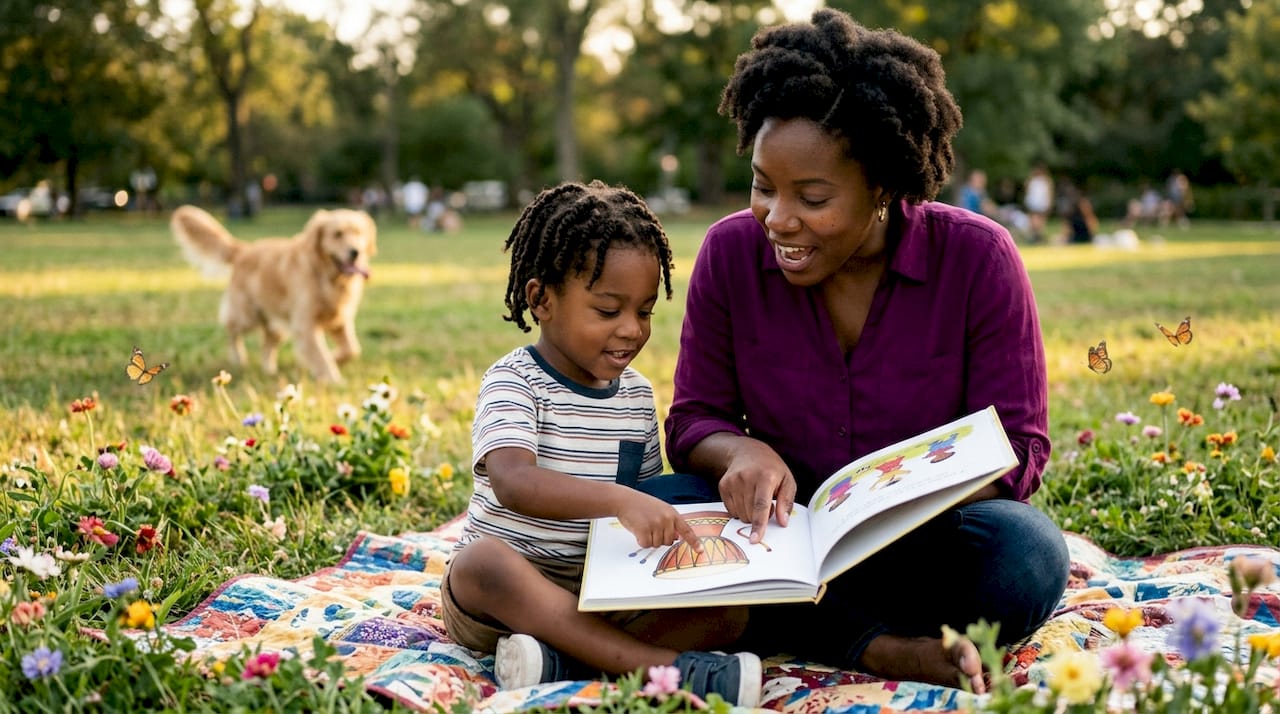
Expressive illustrations also invite emotional reading. A child who sees a character’s face showing pride, worry, or joy will often name that emotion unprompted. That moment of naming is the start of a real dialogue about feelings, family, and culture.
Here is what makes illustrated cultural books especially strong as conversation starters in literature:
- Cultural symbols and community scenes give children a visual vocabulary for their own heritage before they have the words to describe it.
- Expressive character faces invite children to name emotions and connect them to personal experiences.
- Hidden illustration details reward slow, careful looking and give caregivers a natural reason to pause and wonder aloud.
- Familiar settings such as a grandmother’s kitchen or a neighborhood market reduce the distance between the story and the child’s own life.
- Bilingual text alongside illustrations reinforces vocabulary in two languages at once, making the image the anchor for both.
Pro Tip: Instead of asking “What color is that?” try saying “I wonder why she looks so proud here.” Wonder-based statements invite children to think and respond freely, while quiz-style questions shut the conversation down.
What does research say about illustrated cultural books and child development?
The evidence for using these books is strong and covers more than just reading skills. Traditional culture picture books significantly improve emotional regulation in preschool children aged 4–6, with results reaching high statistical significance (p < 0.001). That means the benefit is not a coincidence. It shows up consistently across children.
The intervention that produced those results combined shared reading, emotional discussion, role-play, and cultural reflection. Each of those elements is something any caregiver can do at home with the right book in hand.
Government educational guidance recommends using simple-format books with detailed illustrations and familiar narratives to build bilingualism and cultural pride. The recommendation is grounded in evidence that interactive reading builds phonological awareness and concept linking at the same time.
“Cultural books invite children to slow down and observe, using illustration as a bridge to complex themes of heritage and environment.” — Nat Cardozo, author and educator
The table below compares outcomes from illustrated cultural books versus generic picture books across three key development areas.
| Development area | Illustrated cultural books | Generic picture books |
|---|---|---|
| Vocabulary growth | Strong gains, especially in heritage language terms | Moderate gains in general vocabulary |
| Emotional regulation | Significant improvement in preschoolers aged 4–6 | Some benefit, less culturally anchored |
| Bilingual development | Supports dual-language acquisition through cultural context | Limited without explicit bilingual framing |
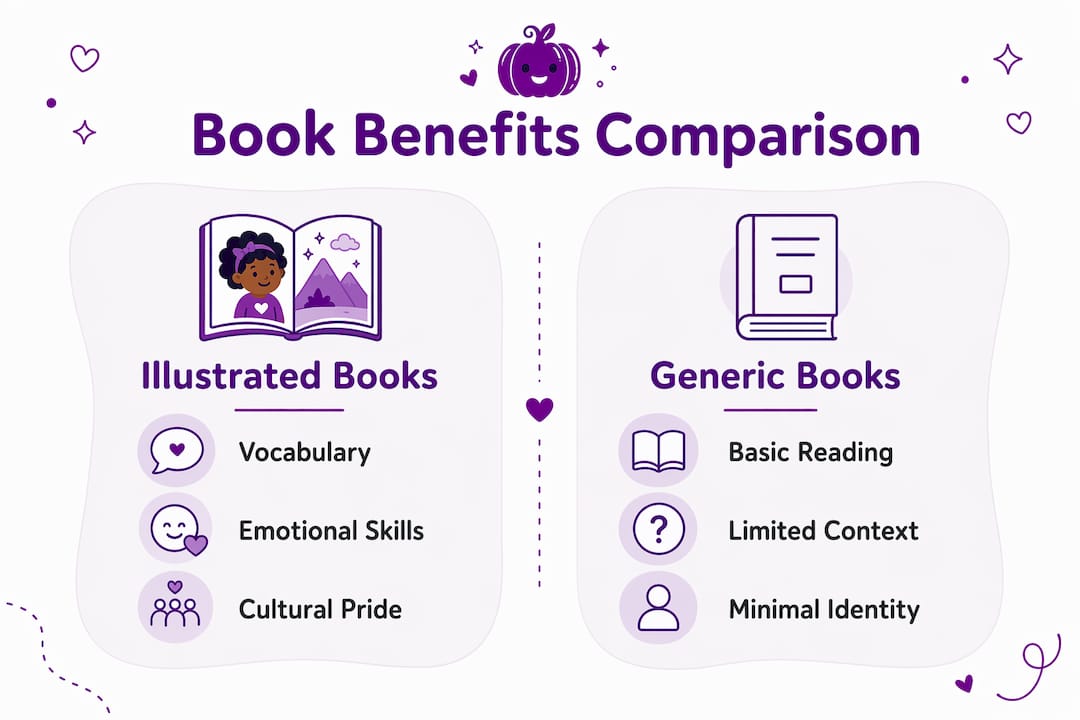
The pattern is clear. Cultural context amplifies the benefit. A book about a child celebrating Diwali or Vaisakhi does more for a Punjabi-speaking child’s vocabulary and emotional development than a generic story about a birthday party.
Understanding the illustrated books benefits for vocabulary goes deeper than word count. Children who see their own culture reflected in books build confidence alongside language skills.
How to engage with cultural books as a caregiver or educator
Choosing the right book is the first step. Books connected to a child’s daily life and identity reduce the sense of “othering” and make cultural themes feel personal rather than distant. A child who recognizes their grandmother’s cooking style or their family’s celebration in a story will lean in, not tune out.
Once you have the right book, the way you read it matters just as much as the book itself. Follow these steps to get the most out of each reading session:
- Read it yourself first. Notice the illustration details, the cultural symbols, and any bilingual text. You will guide the conversation better when you know what is on each page.
- Start with the cover. Ask your child what they notice before you open the book. This builds prediction skills and sets up curiosity.
- Pause at expressive illustrations. Give your child time to look. Silence is not a problem. It means they are thinking.
- Use wondering statements. Say “I wonder what happens next” or “I wonder how she feels” instead of asking closed questions.
- Let the child lead. If they want to talk about the grandmother’s necklace instead of the main story, follow that thread. That is where their real curiosity lives.
- Bring in your own family story. Connect the book to a real memory or tradition. “That looks like the food we make at Diwali” is more powerful than any comprehension question.
- Read it again. Children aged 3–6 benefit enormously from repetition. Each reading surfaces new details and new conversations.
Effective caregiver techniques include pointing out hidden illustration details and using wondering statements to let children lead. Researchers are clear that avoiding quizzing maintains engagement and keeps the dialog natural.
Pro Tip: Build a short “cultural book time” into your daily routine, even just 10 minutes before bed. Consistency matters more than duration. Children who hear heritage language stories regularly build bilingual vocabulary faster than those who encounter them only occasionally.
For caregivers building a bilingual routine, the early childhood bilingual learning guide from Littlepumpkins offers practical ways to weave cultural books into everyday moments.
How do cultural books build identity and empathy in young children?
Cultural books do something that generic picture books rarely achieve. They show children that their heritage is worth celebrating and worth knowing. Books by cultural creators give children the vocabulary and pride to understand their ancestors’ brilliance and bravery before mainstream culture acknowledges it. That kind of representation shapes how a child sees themselves.
The impact of illustrated stories on identity is not abstract. When a child sees a character who looks like them, speaks like them, or celebrates the same festivals, they experience recognition. That recognition builds self-efficacy. It tells them their story belongs in books.
Here is how cultural books build both identity and empathy at the same time:
- Resilience stories show children that their culture has faced hardship and survived. That knowledge builds pride and emotional strength.
- Community scenes teach children that their way of life is shared, valued, and worth passing on.
- Stories from other cultures build empathy by showing children that different families have equally rich and meaningful lives.
- Complex cultural themes handled with care give children language for nuanced conversations about identity, belonging, and difference.
“Reading cultural books can serve as a space for safe, complex cultural conversations where divergence of views is accepted, fostering profound philosophical compassion.” — Deborah Frances-White, author
Children engaging with illustrated cultural books demonstrate increased cultural pride, empathy, and bilingual vocabulary acquisition, as observed by early childhood educators across multiple settings. That combination of pride and empathy is rare. Most learning tools build one or the other. Cultural books build both at once.
Key Takeaways
Illustrated cultural books build vocabulary, emotional regulation, and cultural pride simultaneously, making them the most effective conversation tool available to parents and educators of young children.
| Point | Details |
|---|---|
| Illustrations drive dialogue | Hidden details and expressive art give children and caregivers something specific to notice and discuss together. |
| Research backs the benefits | A 2026 meta-analysis confirms a moderate positive effect on vocabulary, and cultural picture books significantly improve emotional regulation in children aged 4–6. |
| Wonder beats quizzing | Wondering statements (“I wonder why…”) produce richer, child-led conversations than closed comprehension questions. |
| Cultural context amplifies learning | Books tied to a child’s own heritage build bilingual vocabulary and emotional skills faster than generic picture books. |
| Representation builds identity | Books created by cultural creators give children pride and language to understand their own heritage before mainstream acknowledgment. |
What I have learned from watching children read cultural books
I have sat with children who barely spoke during regular story time and watched them come alive the moment a book showed their grandmother’s kitchen or a festival they recognized. That shift is not subtle. It is immediate and unmistakable.
The biggest mistake I see caregivers make is turning reading into a performance. They ask question after question, checking for comprehension, and the child shuts down. The book becomes a test. The conversation dies. The most productive sessions I have witnessed are the quiet ones, where a caregiver simply says “I wonder…” and then waits.
Children have strong opinions about their heritage. They just need permission to express them. A book that shows their culture as beautiful and complex gives them that permission. The illustration does the heavy lifting. Your job is to slow down and let the child respond.
I also think caregivers underestimate the power of reading the same book many times. The first reading is about the story. The second is about the pictures. By the third reading, children are making connections to their own lives that they could not articulate before. Patience is the whole strategy.
The joy children show when they recognize something from their own family in a book is worth more than any formal lesson. That joy is the foundation of a lifelong love of reading, heritage, and language.
— Bobby
Littlepumpkins books that bring culture and language to life
Littlepumpkins designs illustrated books specifically for children aged 3–6 who are growing up between two languages and two cultures. Each book pairs rich cultural illustrations with reusable magic ink tracing, so children practice writing in Punjabi, Hindi, or English while connecting with the stories and symbols of their heritage.
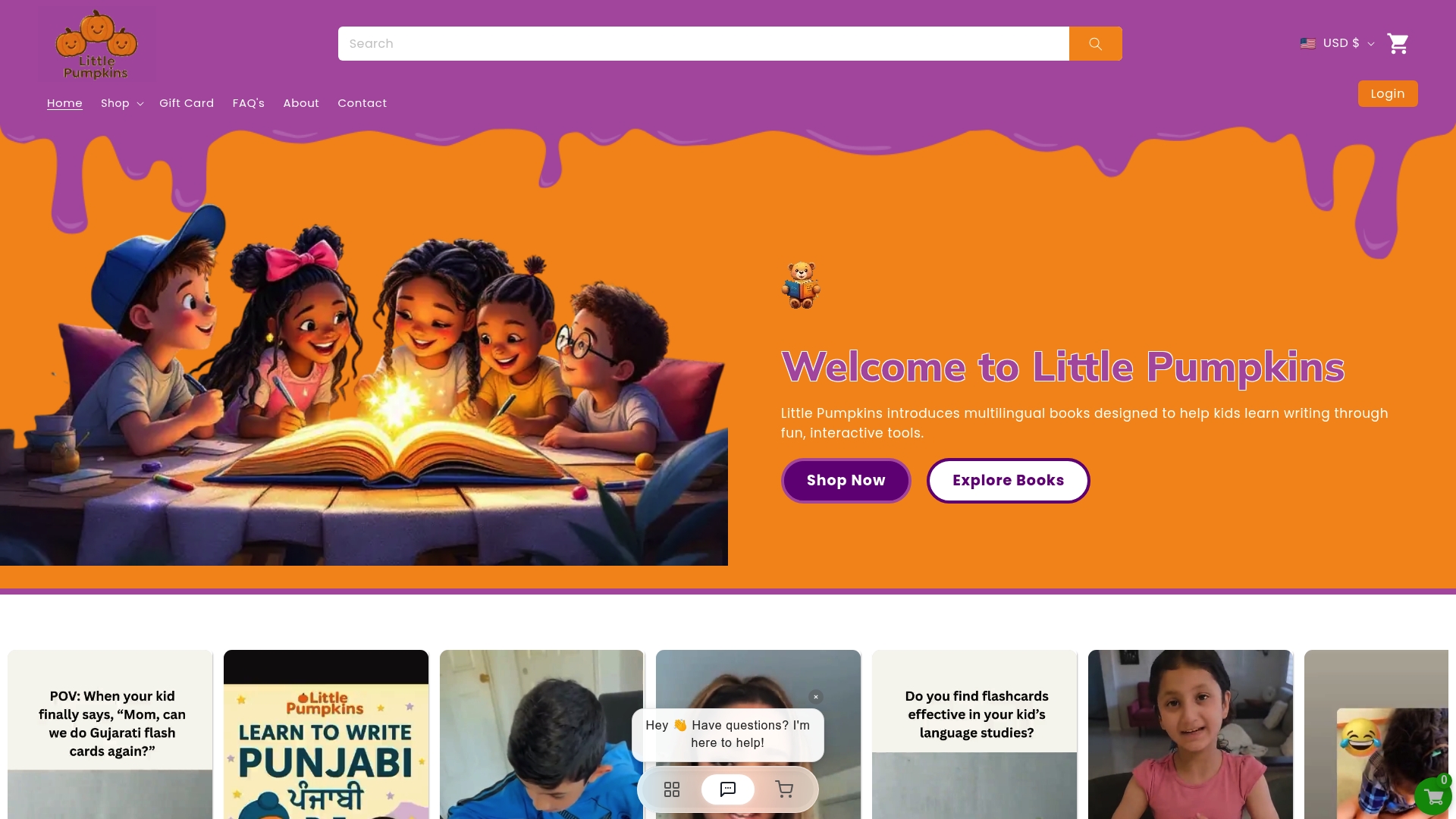
The magic ink technology means children can trace letters again and again without wasting paper, making it easy to build a daily reading and writing routine at home. Parents who want to go further can explore the full range of culturally illustrated writing books or browse the complete Littlepumpkins learning tools collection to find the right fit for their child’s age and language goals.
FAQ
How do illustrated cultural books start conversations with young children?
Illustrated cultural books use expressive art, familiar cultural symbols, and relatable settings to give children something specific to notice and react to. That visual recognition naturally pulls out questions, memories, and stories from children without any prompting from caregivers.
What age benefits most from cultural picture books?
Children aged 3–6 show the strongest response to illustrated cultural books, with research confirming significant improvements in emotional regulation and vocabulary development within this age group.
How often should caregivers read cultural books with children?
Daily reading, even for just 10 minutes, builds bilingual vocabulary and cultural connection faster than occasional sessions. Repetition matters. Children gain new insights and make new connections each time they revisit the same book.
Do illustrated cultural books help with bilingual learning?
Yes. Books that pair illustrations with bilingual text anchor new words in both languages at once, using the image as a shared reference point. Government educational guidance specifically recommends illustrated books with familiar narratives to support bilingual development in young children.
What makes a cultural book effective for sparking dialogue?
The most effective books for discussion feature detailed illustrations with hidden details, characters whose emotions are clearly visible, and settings tied to the child’s own daily life and heritage. These elements give caregivers and children a natural reason to pause, wonder, and talk.