


How Reusable Books Support Sustainable Classrooms
Reusable books are defined as educational materials designed to pass from one student to the next across multiple school years, cutting per-student resource use with every additional reader. Understanding how reusable books support sustainable classrooms starts with one fact: secondary schools discard over seven million kilograms of schoolbooks annually, most after a single year of use. That waste is not inevitable. Programs like Georgia State University’s Panther Book Access and research from the University of Kassel prove that reuse, when managed well, delivers measurable environmental and financial gains for schools at every level.
How do reusable books reduce environmental impact in classrooms?
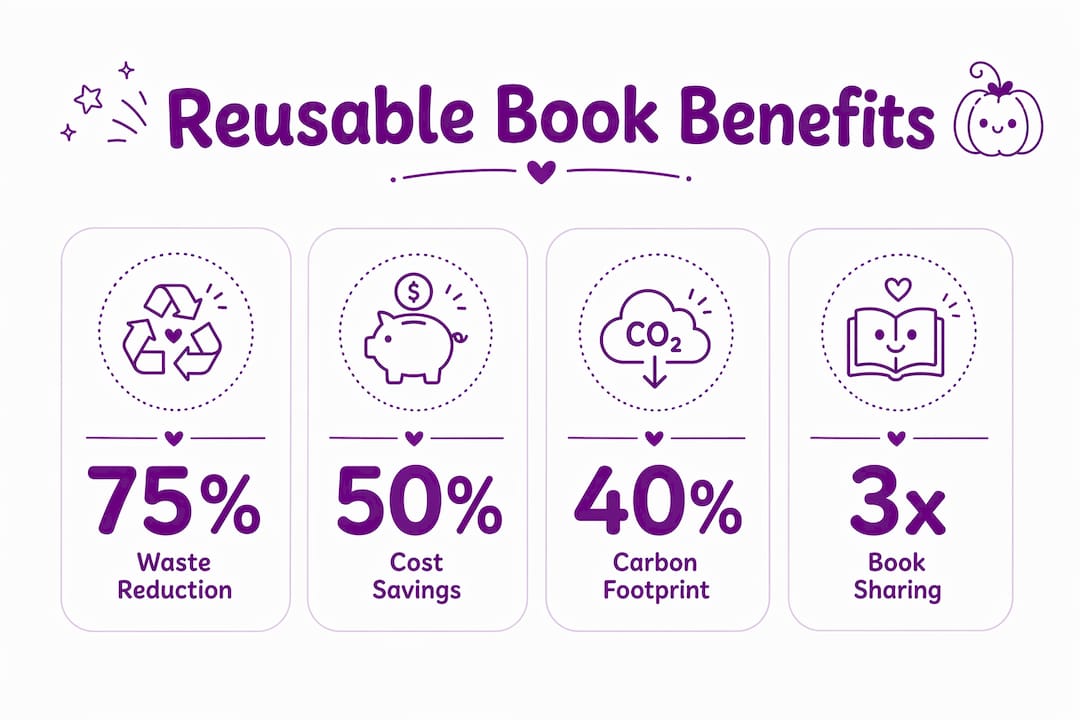
Sharing a physical book decreases per-reader carbon footprint roughly in proportion to the number of readers who share it. A book lent to one other person halves its per-reader impact. Pass it through four students, and the footprint drops to one-quarter of the original. That math makes circulation the single most powerful variable in any school’s sustainability equation.
The waste problem in disposable educational materials is significant. Single-use workbooks, consumable activity sheets, and textbooks replaced every curriculum cycle generate enormous landfill volume. Research highlights that the scale of waste from single-use schoolbooks demands systemic reuse programs, not individual recycling efforts. Recycling a book at end-of-life is far less effective than preventing its disposal in the first place.
Life-cycle analysis adds another layer of evidence. A University of Kassel study found that reusable systems reduce resource use by up to 52% compared to single-use alternatives across the full production and logistics chain. That figure covers energy, water, and raw materials. It means the environmental case for reusable books is not just about paper saved. It covers the entire supply chain from printing to delivery.
“The key sustainability lever is designing reuse systems for consistent circulation across the entire workflow, not one-off reuse events.” — University of Kassel research insight
Three factors determine whether reusable books actually reduce environmental impact:
- Circulation depth: How many students share each copy before it is retired
- Displacement rate: Whether reuse genuinely replaces new purchases or simply adds to existing stock
- Book condition: Whether materials remain usable across multiple cohorts without replacement
When all three align, eco-friendly teaching materials deliver real, measurable results. When they do not, the environmental gains shrink fast.
What are the best systems for maximizing book reuse in schools?
Reusable books work best when schools treat them as infrastructure, not consumables. Infrastructure gets maintained, tracked, and managed. Consumables get used and discarded. That mindset shift is the foundation of every successful reuse program.
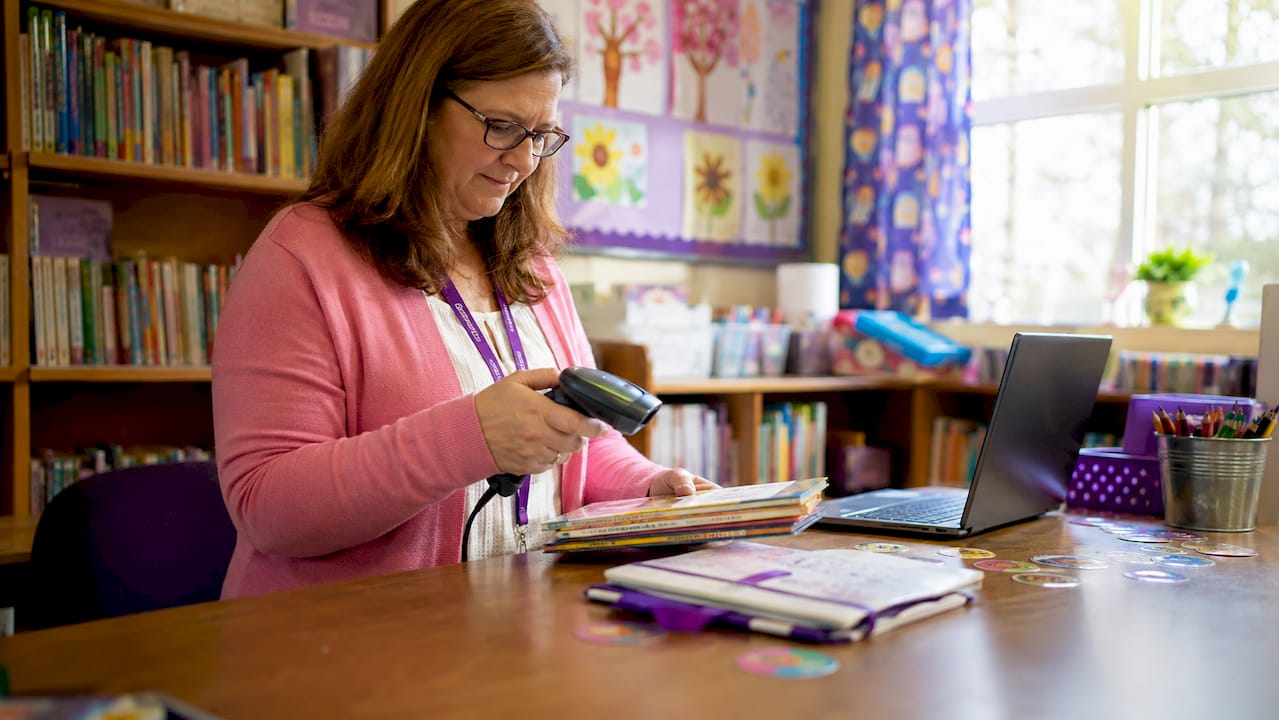
Efficient tracking is the first practical requirement. Circulation management with barcodes or RFID increases sharing rates and reduces loss. Systems that “remember” book custody ensure equitable access across student cohorts. Without tracking, books disappear into homes, get damaged without accountability, or sit idle on shelves instead of circulating.
A fast return-to-issue cycle is equally critical. Cycle time, how fast books move from return to reissue, is decisive in maintaining high reuse rates and displacing new purchases. A book sitting in a storage room for three months between users is not delivering its environmental benefit. Schools that process returns quickly and reissue within days keep their reuse rates high.
Here is a practical four-step system for schools starting a reuse program:
- Catalog and label every book with a barcode or unique identifier before the first loan
- Set clear condition standards so students and parents know what “acceptable return” means
- Schedule a return window at least two weeks before the next cohort needs the books
- Assign a staff member to inspect, repair, and reissue returned books within five school days
Maintenance and repair routines extend book life significantly. Circularity in educational materials demands maintenance routines and clear governance to extend usable life beyond single cohorts. Simple repairs like replacing torn covers, taping loose spines, and cleaning pages can add two or three additional years of use to a single copy.
Pro Tip: Assign a small student “book care team” each semester to inspect returned materials. Kids take better care of books they feel responsible for, and the program builds environmental awareness at the same time.
For early learners, reusable formats like magic ink tracing books offer a built-in advantage. Learn how magic ink writing books work to understand why they reset completely after each use, making them ideal for classroom circulation without any wear-and-tear concerns.
How can schools cut costs with reusable book programs?
The financial case for reusable books is as strong as the environmental one. Georgia State University’s Panther Book Access pilot saved students more than $560,000 in two semesters by expanding access to shared course materials. The pilot involved over 12,000 students and eliminated cost barriers while supporting sustainability goals. That is a direct, documented result from a single institution in a single academic year.
Schools at the K-12 level can achieve similar gains through sustainable procurement. Adopting sustainable booklists and stationery procurement reduces the financial and environmental costs of yearly supplies. The City of Greater Geelong’s guidance on sustainable school procurement shows that the shift does not require a large budget. It requires a deliberate policy decision.
The table below shows how reusable and disposable book models compare across key cost and sustainability factors:
| Factor | Disposable model | Reusable model |
|---|---|---|
| Per-student cost | Full price every year | Divided across multiple cohorts |
| Annual waste volume | High (replaced yearly) | Low (multi-year lifespan) |
| Carbon footprint per reader | Full production impact | Reduced with each additional reader |
| Procurement complexity | Simple but recurring | Higher upfront, lower ongoing |
| Equity of access | Dependent on family budget | Shared access reduces barriers |
Three procurement actions schools can take right now:
- Audit current book lists to identify titles replaced annually that could shift to a shared model
- Partner with local libraries or district book pools to extend circulation beyond a single school
- Integrate EPA environmental education resources into the curriculum alongside reusable materials, reinforcing sustainability as a lesson, not just a policy
The EPA’s free K-12 environmental education resources include lesson plans and teacher guides updated in 2026. Pairing these with a reusable book program turns sustainability from a procurement decision into a living classroom value.
What challenges come with reusable book initiatives?
The biggest risk in reusable book programs is the rebound effect. Environmental rebound effects in reuse markets occur when reuse does not actually displace new production. If a school shares books among students but still orders the same number of new copies each year, the environmental benefit disappears. Reuse must replace purchasing, not supplement it.
Idle inventory is a related problem. Books sitting unused in storage rooms are not reducing anyone’s footprint. A behavior-first mindset improves impact. Encouraging frequent sharing and reducing friction for circulation are critical for reuse success. Every week a book sits idle is a week it is not displacing a new purchase somewhere else.
“Sustained, system-wide reuse delivers environmental benefits. One-off sharing events do not.” — Plumerie library research summary
Common challenges and how to address them:
- Student damage: Set clear condition policies and involve students in book care from day one
- Lost books: Use tracking systems and require deposits or signed agreements for high-value titles
- Curriculum changes: Build flexibility into procurement by choosing titles with multi-year relevance
- Parent resistance: Share the cost savings data directly. The Georgia State University example resonates with families facing real supply costs
For educators choosing between reusable and traditional formats, the comparison between magic ink books vs. traditional workbooks offers a clear breakdown of durability and reuse advantages. The right format choice at the start prevents waste before it begins.
Key Takeaways
Reusable books reduce classroom waste, lower per-student costs, and deliver measurable environmental benefits only when schools build active circulation systems that consistently displace new purchases.
| Point | Details |
|---|---|
| Circulation drives impact | Each additional reader reduces per-book carbon footprint proportionally. |
| Tracking prevents loss | Barcodes or RFID systems keep books circulating and reduce idle inventory. |
| Financial savings are real | Georgia State’s pilot saved over $560,000 in two semesters across 12,000 students. |
| Rebound effects undermine gains | Reuse must replace new purchases, not add to existing stock, to deliver true savings. |
| Maintenance extends lifespan | Simple repairs and clear condition standards add years of use to every copy. |
Why reusable books deserve a permanent place in every school
I have watched schools invest in sustainability initiatives that look good on paper but fade within a year. Reusable book programs are different. They are not a campaign. They are a structural change in how schools think about materials.
The evidence from Georgia State University and the University of Kassel is not theoretical. These are real programs with real numbers. What strikes me most is how low the barrier to entry actually is. You do not need a large budget or a dedicated sustainability coordinator. You need a tracking system, a return policy, and someone willing to run a repair session at the start of each semester.
The piece most schools miss is the behavior side. A reuse program without a culture of care is just a lending library that slowly loses books. When educators connect reusable materials to active sustainability lessons, using resources like the EPA’s environmental education guides, students become stakeholders in the program. That changes everything.
I also believe reusable formats designed for early learners, like magic ink tracing books, represent the next frontier. They reset completely after each use, require no consumables, and introduce children to the idea that learning tools can be shared and cared for. That is a value worth building from age three.
The future of sustainable classrooms is not about finding greener paper. It is about building systems where materials circulate, last, and teach something beyond the curriculum printed on their pages.
— Bobby
Littlepumpkins’ reusable learning tools for greener classrooms
Littlepumpkins designs books that are built to be used again and again. Their magic ink writing and tracing books reset after each use, making them a natural fit for classrooms and families committed to reducing waste.
Whether you are an educator building a sustainable classroom resource library or a parent looking for eco-friendly teaching materials that last, Littlepumpkins has tools designed for both. Explore their full range of reusable writing books for kids and story books for young readers. Each book is designed to support early learning across multiple children, cutting waste one magical letter at a time.
FAQ
What makes a book “reusable” in a classroom setting?
A reusable classroom book is any educational material designed to pass between students across multiple school years without being consumed or written in permanently. Magic ink tracing books, hardcover textbooks, and library-style lending materials all qualify.
How much can schools actually save with reusable book programs?
Georgia State University’s Panther Book Access pilot saved students more than $560,000 in two semesters. Savings scale with the number of students involved and the consistency of the return-and-reissue cycle.
Do reusable books always reduce environmental impact?
Not automatically. Research shows that reuse only reduces environmental impact when it displaces new purchases. If schools continue ordering new copies alongside shared ones, the rebound effect cancels out the gains.
What tracking tools work best for school book lending?
Barcode systems and RFID tags are the most widely used options. Both reduce book loss and improve circulation rates by keeping a clear record of which student holds each copy at any given time.
Are reusable books suitable for early childhood classrooms?
Yes. Formats like magic ink tracing books are especially well-suited for children aged 3–6 because they reset completely after each use, require no consumables, and hold up to repeated handling without wear.