


Low-Mess Writing Activities for Young Learners
Low-mess writing activities for young learners are short, focused exercises designed to build writing skills with minimal setup and cleanup. They work because they lower the barrier to entry for children aged 3–6, reducing anxiety while building real language skills. Educational guidelines support brief sessions of 3–15 minutes that prioritize fluency over accuracy. The result is a child who writes more, fears mistakes less, and actually enjoys the process. Littlepumpkins designs its tools around exactly this principle, making writing feel magical rather than stressful.
What are effective low-mess writing routines for young children?
The most effective mess-free writing exercises follow a predictable structure every single time. When children know what to expect, they spend their mental energy on writing rather than figuring out what comes next. Consistent routine design gives children the cognitive space to focus on output rather than process. That shift alone produces measurable gains in stamina and confidence.
Power Writing is the gold standard for early writing routines. Power Writing sessions start at 3–5 minutes for beginners and can extend to 10–15 minutes as children grow more comfortable. The structure is simple: a prompt is given, the child writes without stopping, and no corrections happen during the session. That last point matters more than most parents and educators realize.
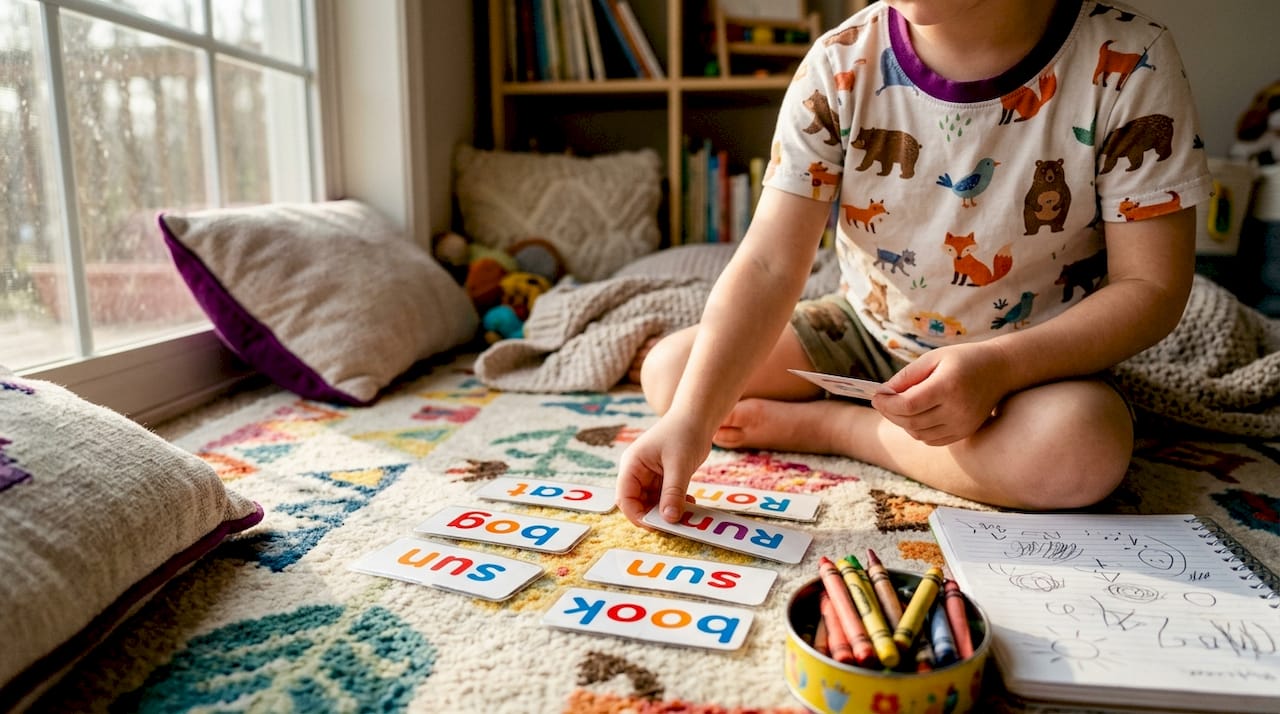
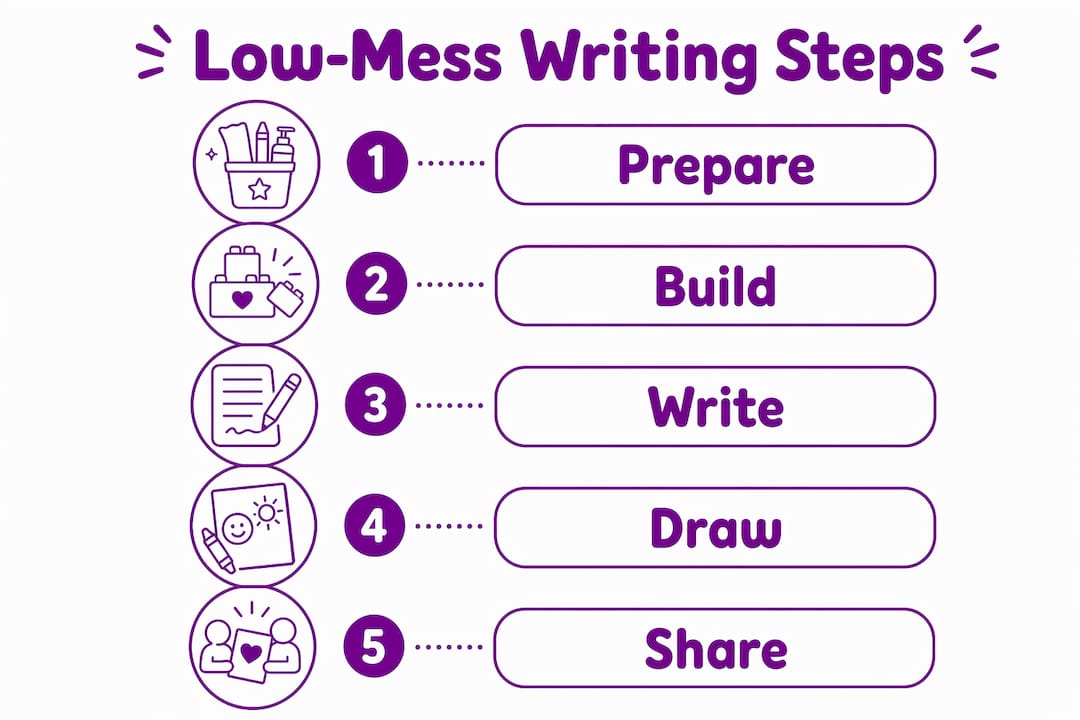
A build-write-draw sequence works especially well for ages 3–6. The child first builds something (arranges word cards, traces a shape, or assembles a sentence with tiles), then writes a word or sentence, then draws a picture to match. Each step reinforces the last without adding mess or confusion.
Pro Tip: Set a visual timer your child can see. When the timer runs, the session ends. This removes the power struggle and teaches children that writing has a clear, safe finish line.
Here is a simple weekly routine to get started:
- Monday: Trace a letter or word using a finger on a sensory tray or reusable tracing book.
- Tuesday: Use a “This or That” prompt and write one sentence with a starter phrase.
- Wednesday: Build a sentence using word cards, then copy it onto paper or a reusable surface.
- Thursday: Draw a picture first, then write one word or sentence to label it.
- Friday: Free write for 3–5 minutes on any topic the child chooses.
Rotating activities this way keeps sessions fresh without adding prep time for you.
How do no-prep prompts like “This or That” engage young writers?
The blank page is the single biggest obstacle for early writers. A good prompt removes it entirely. Zero-prep writing prompts like “This or That” give children an immediate topic and a sentence starter, so they can begin writing within seconds of sitting down.
“This or That” works by offering a simple choice: cats or dogs, pizza or tacos, rain or sunshine. The child picks one and writes why. Sentence starters like “I like ___ because ___” scaffold the response without doing the thinking for them. Children at different skill levels can write one simple sentence or three more complex ones, making the activity easy to differentiate across a mixed group.
The Sentence Building Caterpillar is another no-prep favorite. Word card manipulation helps children grasp sentence structure through physical movement rather than abstract rules. Each “segment” of the caterpillar holds one word, and the child arranges the segments into a sentence before writing it down. The kinesthetic element keeps hands busy without creating any mess.
Opinion-based prompts also build confidence fast. “Would You Rather” writing routines use silly, high-interest questions to get children writing full opinion paragraphs. The silliness matters. When a child is laughing about whether they would rather eat a worm or a spider, they forget to be afraid of writing.
- Use sentence starters printed on a card so children can reference them independently.
- Offer exactly two choices per prompt. More than two creates decision fatigue.
- Accept any answer. The goal is words on the page, not correct opinions.
- Let children illustrate their choice before writing to activate prior knowledge.
- Rotate prompt themes weekly to maintain novelty without adding prep work.
What sensory and digital tools support early writing with minimal mess?
Fine motor development is the physical foundation of writing. Pediatric therapy guidelines identify sensory tracing and playdough manipulation as essential pre-writing activities. These activities build the hand strength and control children need before a pencil ever enters the picture. They also produce zero mess when set up correctly.
A sensory tray filled with rice, sand, or salt lets children trace letters with one finger. The tray shakes flat in seconds, ready for the next letter. Playdough rolling and pinching builds the same grip muscles used in handwriting. Neither activity requires paper, ink, or cleanup beyond a quick wipe. Tactile, non-pencil practices are especially valuable for children who struggle with pencil grip, because they build strength without the frustration of a tool that feels too hard to control.
Digital tools add a layer of auditory and visual feedback that sensory trays cannot. Multisensory digital apps reinforce letter knowledge and sequencing through sound and animation, which strengthens the brain’s connection between letter shapes and their names. The best apps offer progressive levels, moving from simple two-letter words up to longer sequences as the child’s skill grows.
Pro Tip: Pair a digital activity with a physical one in the same session. Let your child trace a letter on a sensory tray first, then find that letter on a tablet app. The two-step process deepens memory without doubling the time.
| Tool type | Mess level | Best for | Skill built |
|---|---|---|---|
| Sensory tray (rice or sand) | Very low | Ages 3–5 | Letter formation, fine motor |
| Playdough manipulation | Low | Ages 3–6 | Grip strength, hand control |
| Reusable tracing book | None | Ages 3–6 | Letter tracing, fluency |
| Digital letter app | None | Ages 4–6 | Letter recognition, sequencing |
| Word card sorting | None | Ages 4–6 | Sentence structure, vocabulary |
Reusable tracing books sit at the top of the low-mess category. Littlepumpkins builds its tracing and handwriting books around magic ink technology, so children trace letters that appear and disappear without any ink, paint, or mess. The books work in English, Hindi, and Punjabi, making them one of the few tools that support bilingual writing development at this age.
What mistakes should you avoid in early writing sessions?
The most damaging mistake is correcting spelling or grammar during a writing session. Strict prohibition on corrections during early writing boosts willingness to write and improves stamina over time. When a child stops mid-sentence to erase and fix a letter, the writing momentum breaks. The inner editor switches on, and the words stop flowing. Corrections belong in a separate, clearly labeled editing session, not during drafting.
Cognitive overload is the second major barrier. Low-cognitive load activities promote immediate success and motivation because they remove the need to figure out instructions while also trying to write. If a child has to ask “What do I do?” more than once, the activity is too complex. Simplify the prompt, shorten the session, or add a visual anchor like a sentence starter card.
“The goal of early writing is not a perfect sentence. It is a child who believes they are a writer. Every word on the page, spelled any way at all, is evidence that belief is growing.”
Shared writing is the most effective scaffold when a child freezes. You write one word, the child writes the next. You say a sentence aloud, the child copies one word from it. This modeling approach shows children that writing is a human, imperfect act, not a performance. Play-based learning consistently improves writing motivation in early childhood precisely because it removes the performance pressure.
- Never ask “Is that how you spell it?” during a writing session.
- Keep sessions short enough that the child wants to do it again tomorrow.
- Celebrate quantity, not quality. Ten messy words beat two perfect ones.
- Model your own imperfect writing in front of your child regularly.
Key Takeaways
Low-mess writing activities work best when they are short, structured, and completely free of correction pressure during the session itself.
| Point | Details |
|---|---|
| Start with 3–5 minute sessions | Short Power Writing sessions build stamina without overwhelming children aged 3–6. |
| Use no-prep prompts | “This or That” and “Would You Rather” prompts remove blank-page fear and get children writing immediately. |
| Prioritize sensory pre-writing | Playdough and sensory trays build the fine motor skills children need before pencil work begins. |
| Never correct during drafting | Corrections during writing sessions reduce motivation and shut down fluency in young learners. |
| Reusable tools eliminate mess | Magic ink tracing books and word cards deliver full writing practice with zero cleanup. |
Why simplicity is the secret to early writing confidence
I have watched parents and educators make the same mistake for years. They invest in elaborate writing kits, themed journals, and multi-step projects, and then wonder why a four-year-old loses interest after two minutes. The truth is uncomfortable: complexity is the enemy of early writing confidence.
The children I have seen make the fastest progress are the ones whose adults kept things almost boring in their simplicity. A tray of rice. A sentence starter card. Three minutes on a timer. That is it. The magic is not in the material. It is in the repetition and the complete absence of judgment during the session.
What I find most parents underestimate is the power of letting a child write badly. A scribbled letter that the child calls a “B” is not a failure. It is a child who has decided they are a writer. That decision is the hardest one to build and the easiest one to destroy with a well-meaning correction. Protect it fiercely.
Bilingual families carry an extra layer of this challenge. Writing in a heritage language like Hindi or Punjabi can feel intimidating when children see those scripts as foreign rather than familiar. Tools that make those letters feel as playful and approachable as English letters change that story entirely. Littlepumpkins was built for exactly that moment.
— Bobby
Littlepumpkins makes mess-free writing practice magical
Littlepumpkins designs reusable writing books for children aged 3–6 that bring together everything this article describes: short sessions, zero mess, and the kind of playful tracing that builds real letter formation skills. The magic ink technology means letters appear as your child traces and disappear when the page dries, so the book is ready to use again immediately.
Whether your child is learning English, Hindi, or Punjabi, Littlepumpkins has a tracing book built for that script. The English magic tracing book covers the full alphabet with illustrated pages that keep children engaged from the first letter to the last. For families nurturing a connection to South Asian heritage, the Hindi and Punjabi editions bring those beautiful scripts to life one magical letter at a time. Writing practice has never been this clean, this fun, or this easy to fit into a busy day.
FAQ
What are low-mess writing activities for young learners?
Low-mess writing activities are short, structured exercises for children aged 3–6 that build writing skills with minimal setup and no significant cleanup. Examples include sensory tray tracing, reusable magic ink books, and no-prep prompt cards.
How long should a writing session be for a 3 to 6 year old?
Power Writing sessions start at 3–5 minutes for beginners and can extend to 10–15 minutes as children build stamina. Keeping sessions short prevents frustration and makes children more willing to practice daily.
Should I correct my child’s spelling during writing activities?
No. Correcting spelling or grammar during a writing session reduces motivation and breaks writing fluency. Save all corrections for a separate editing time, and focus only on encouraging the child to keep writing during the session itself.
What sensory activities help children prepare for writing?
Playdough manipulation and finger tracing in a rice or sand tray are the most effective pre-writing sensory activities. Pediatric therapy guidelines identify these as essential for building the fine motor strength children need before using a pencil.
How do I help a child who refuses to write?
Start with a “This or That” prompt and a sentence starter card so the child never faces a blank page. Pair writing with a drawing step first, keep the session under five minutes, and never ask for corrections. Children who feel no pressure to be perfect write far more willingly.