


Preschool Writing Readiness Skills to Build at Home
Writing readiness, known formally as emergent writing, is the set of physical and cognitive skills children develop before they can form conventional letters. Building preschool readiness writing skills at home gives your child a real head start, and the good news is that it starts with scribbling, drawing, and play. Research confirms that emergent writing begins with mark-making long before a child touches a pencil to paper in a classroom. You do not need a formal curriculum. You need the right activities, a little patience, and about 10 minutes a day.
What physical skills support writing readiness at home?
Writing readiness is a full-body skill, not just a finger skill. Prewriting skills develop physically from shoulder stability all the way down to wrist flexibility, and every layer matters. A child who cannot stabilize their shoulder will struggle to control a crayon, no matter how motivated they are.
Gross motor development comes first. Outdoor play, crawling, climbing, and carrying objects all build the core and shoulder strength that eventually supports handwriting. These activities are not just fun. They are the physical foundation your child’s pencil grip depends on.
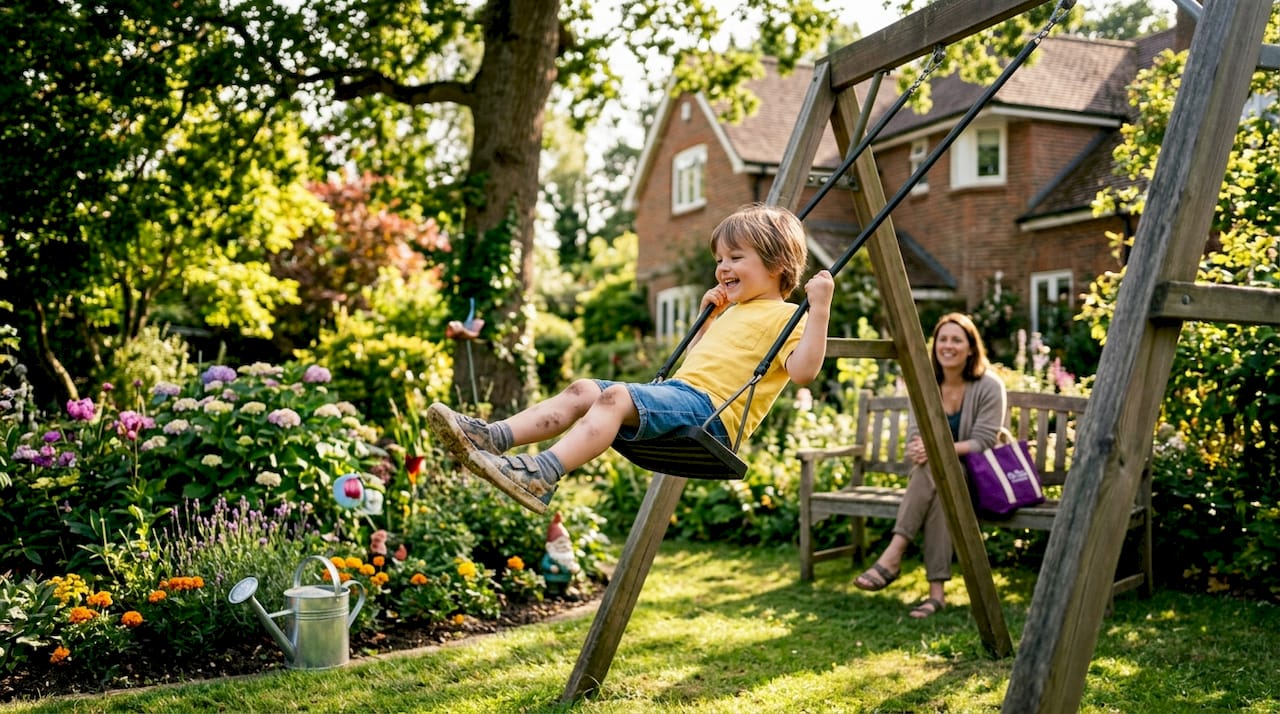
Fine motor skills come next, and the wrist is the key joint to focus on. Edutopia’s 2026 research highlights that wrist bending, straightening, and rotation are all needed for pencil control. Each of these movements can be practiced through play.
Here are simple activities that target the right muscles:
- Playdough squeezing and rolling: Builds grip strength and wrist stability.
- Pouring water between cups: Develops wrist rotation and control.
- Tearing paper into strips: Strengthens the pincer grip used to hold a pencil.
- Painting on a vertical surface: Activates shoulder and elbow stability.
- Threading beads or pasta: Sharpens finger coordination and focus.
Pro Tip: Set up a 5-minute “wrist warm-up” before any writing activity. Roll playdough into a snake, then flatten it with a palm. This simple sequence activates the exact muscles children need for mark-making.
How to use developmentally appropriate writing activities at home
Emergent writing is the term early childhood researchers use to describe the stage when children produce scribbles, drawings, and letter-like marks as their first writing attempts. A 2026 longitudinal study found steady improvement in scribbling and drawing among 4 and 5 year olds, but variable progress in letter-like forms. This tells us one clear thing: scribbling is not a problem to fix. It is progress to celebrate.
The Little Owls resource bank offers an 18-session mini program for ages 3–4, designed by occupational therapists and early years specialists. Each session runs 5–10 minutes and targets a specific skill, from core stability to early pattern making. Short, adult-led sessions like these preserve motivation far better than long worksheet exercises.
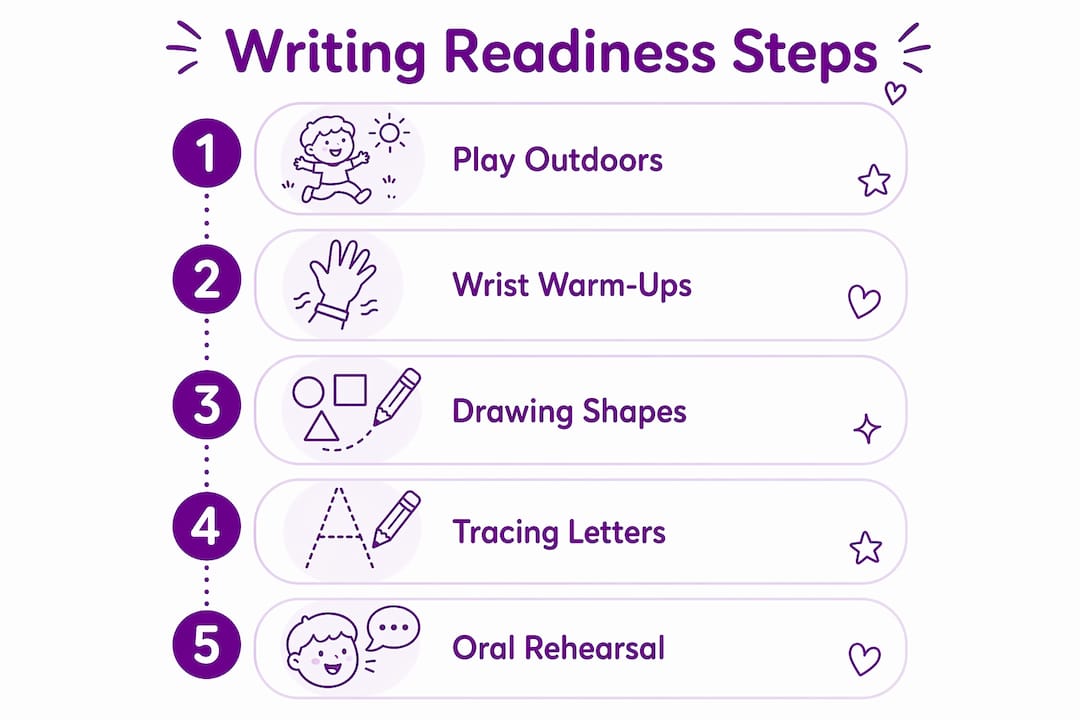
The table below shows which activities match which skills so you can plan your week with purpose.
| Activity | Targeted Skill |
|---|---|
| Drawing free shapes and patterns | Core and shoulder stability |
| Tracing curved lines on paper | Wrist fluidity and pencil control |
| Picking up small objects with two fingers | Pincer grip development |
| Copying zigzag or wave patterns | Early letter-like mark formation |
| Writing name on a cup or label | Letter recognition and personal meaning |
Magnetic letters on the fridge, name cups, and simple drawing books for toddlers are all excellent tools for at-home writing skills activities. They make practice feel like play, which is exactly the point.
Pro Tip: Never correct a child’s scribble by saying “that’s not a letter.” Instead, ask “tell me about what you drew.” This shifts the focus to communication and keeps confidence high.
How can oral rehearsal support early writing composition?
Oral rehearsal is the practice of saying a sentence aloud before writing it down. Edutopia’s 2026 research identifies verbal rehearsal routines as one of the most accessible strategies parents can use at home. It costs nothing, requires no materials, and works for children as young as three.
The logic is straightforward. Speaking and writing share the same language system. When a child says “I see a big red dog” before drawing it, they are organizing their thoughts, building sentence structure, and connecting spoken words to written marks. That connection is the foundation of writing composition.
Here are simple ways to build oral rehearsal into your home routine:
- “Say it before you draw it”: Ask your child to tell you what they want to draw before they pick up the crayon. This primes their thinking.
- Sentence frames: Offer a starter like “Today I feel…” or “My favorite thing is…” and let your child complete it aloud.
- Stretch the sentence: If your child says “dog,” you say “The dog is running fast.” Ask them to repeat the longer version before drawing.
- Story starters: Begin a silly story and ask your child to add one sentence aloud before drawing their part.
These verbal rehearsal strategies also help children who find writing initiation difficult. When a child freezes at a blank page, switching from pencil to speech first can unlock the whole process. You can find more ideas for early literacy activities that pair speaking and writing naturally.
What challenges do parents face with writing readiness at home?
The biggest mistake parents make is pushing formal handwriting too early. Writing development is non-linear, and symbolic progress varies widely between children of the same age. Measuring success by neat letters causes frustration for both parent and child.
A 2025 scoping review found that generative writing and motivation are just as important as handwriting practice for emergent writers. This means the goal is not perfect letters. The goal is a child who wants to write.
Here are the most common challenges and how to handle them:
- Child refuses to pick up a pencil: Switch the entry point. Use verbal rehearsal first, then move to drawing, then to mark-making. Never force the pencil.
- Child gets frustrated quickly: Sessions are too long. Cut to 5 minutes and end on a win, not a struggle.
- Child only scribbles and won’t try letters: This is developmentally normal. Celebrate the scribble and introduce name cups or magnetic letters as low-pressure letter exposure.
- Child copies letters incorrectly: Avoid correcting formation at this stage. Focus on the child’s intent and meaning, not the shape of the letter.
- Parent feels unsure what “good progress” looks like: Good progress is a child who engages willingly and communicates through marks. Check out how to recognize writing readiness for clear developmental signs.
Pro Tip: End every writing session with a positive comment about the content, not the quality. “I love that you drew your dog” builds more confidence than “good job writing.”
Play-based learning improves writing motivation in ways that worksheets simply cannot match. When children choose the topic, the tool, and the pace, they stay engaged longer and return to writing willingly.
Key takeaways
Building writing readiness at home works best when you combine physical play, short purposeful sessions, and verbal rehearsal before any formal handwriting begins.
| Point | Details |
|---|---|
| Start with emergent writing | Scribbling and drawing are real writing progress, not problems to fix. |
| Build motor skills through play | Wrist exercises, playdough, and climbing all support pencil control. |
| Use short sessions | Five to ten minutes of adult-led practice beats long worksheet drills every time. |
| Try oral rehearsal | Ask your child to say their sentence aloud before drawing or writing it. |
| Measure engagement, not neatness | A child who wants to write is ahead of a child who writes neatly but reluctantly. |
What i’ve learned about writing readiness that most guides miss
Most writing readiness advice focuses on the hand. The research points somewhere else entirely. The children I have seen struggle most with early writing are not struggling with their fingers. They are struggling with confidence and with not knowing what to say.
Oral rehearsal is the most underused strategy in home learning for preschoolers. It costs nothing, it works immediately, and it removes the blank-page freeze that stops so many young writers before they start. If your child stares at the paper and does nothing, try talking first. Every time.
The other thing I would push back on is the idea that you need special materials. You do not. A stick in the dirt, a finger in a tray of flour, a crayon on the back of an envelope. These all count. What matters is that your child is making marks with intention and talking about what those marks mean.
That said, the right tools do make a difference for sustained practice. Reusable materials that let children write, wipe, and write again remove the pressure of “wasting” paper and keep sessions feeling fresh. For families raising bilingual children, tools that support multiple scripts are especially valuable. Tracing in a heritage language alongside English builds both motor memory and cultural connection at the same time. That combination is rare, and it matters more than most parents realize.
The families who see the fastest progress are not the ones doing the most. They are the ones doing a little, consistently, with warmth and zero pressure.
— Bobby
Explore Littlepumpkins writing tools for home practice
Littlepumpkins designs reusable magic ink books and flashcards specifically for children aged 3–6 who are building their first writing skills at home. Each book lets your child trace letters, wipe the page clean, and start again, making practice feel like a game rather than a chore.
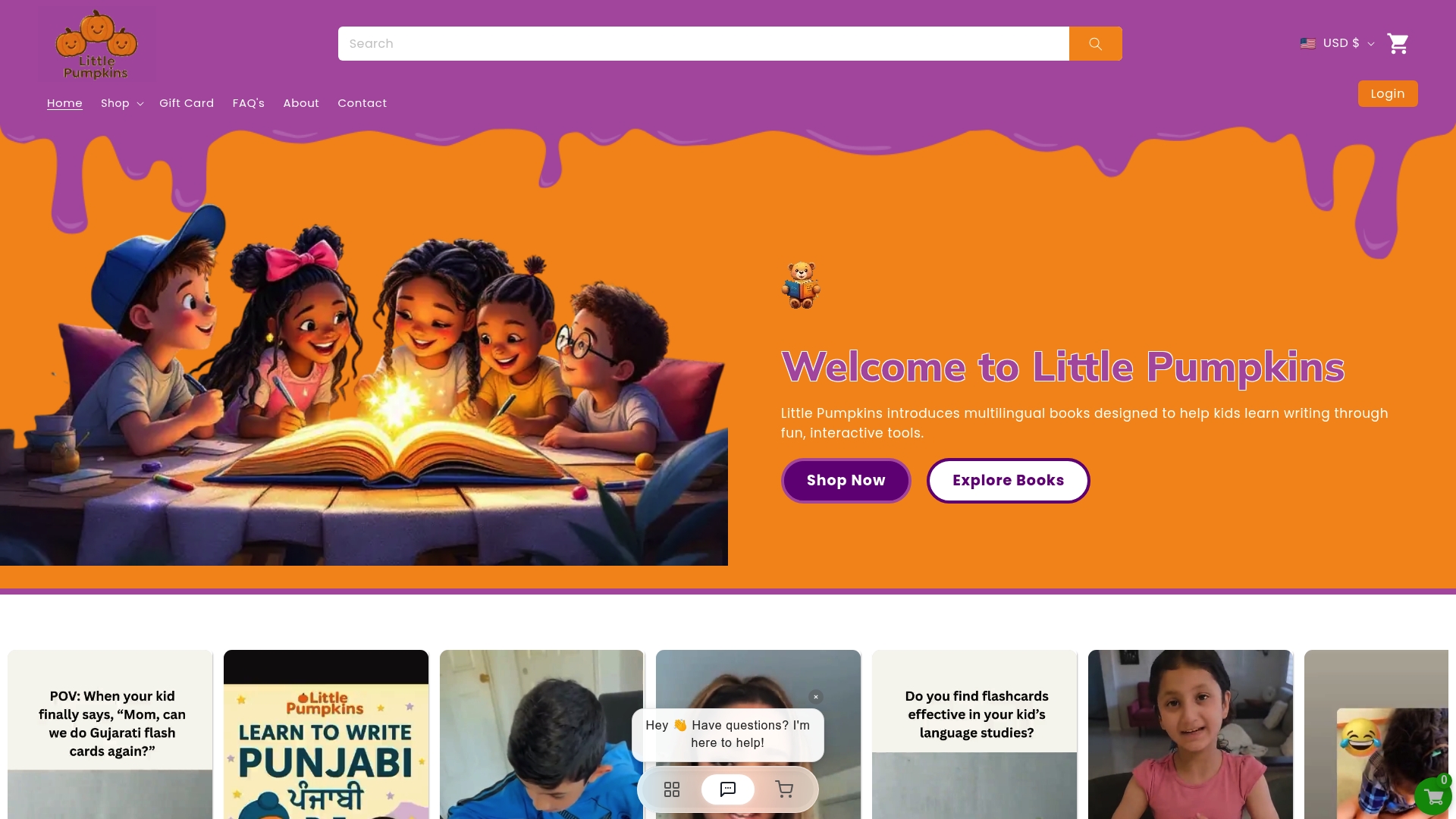
Littlepumpkins offers tracing and handwriting books in English, Hindi, and Nepali, so your child can practice writing in the language of your home as well as the classroom. The magic ink technology is mess-free and eco-friendly, and the illustrations are designed to spark curiosity with every page. If you want to explore the full range of resources, the learning tools collection covers writing, drawing, and tracing in one place. One magical letter at a time, your child builds the skills they need for school and the connection to their roots that lasts a lifetime.
FAQ
What is emergent writing in preschoolers?
Emergent writing is the stage when children produce scribbles, drawings, and letter-like marks before forming conventional letters. It is the recognized starting point for all writing development, and scribbling counts as real progress.
When should i start writing activities at home?
You can begin simple mark-making and drawing activities as early as age 3. Short, playful sessions of 5–10 minutes are the right format for this age group.
How do i know if my child is ready to write letters?
Look for signs like interest in their own name, attempts to copy shapes, and a comfortable pencil grip. The Littlepumpkins guide on recognizing writing readiness walks you through the key developmental signals.
Does tracing help with writing readiness?
Tracing builds the wrist control and letter recognition children need before independent writing. It works best when it feels like play, not a test, which is why reusable tracing tools tend to get more use than single-use worksheets.
How long should home writing practice sessions be?
Five to ten minutes is the right length for children aged 3–5. Research from occupational therapist-informed programs confirms that short, adult-led sessions build skill and confidence without causing frustration.