


Why Preschool Writing Activities Matter for Kids
Preschool writing activities are defined as structured and play-based tasks that teach children ages 3–6 that print carries meaning, forming the foundation for all future literacy. Research from Michigan State University, led by early literacy expert Lori Skibbe, confirms that print-focused activities produce stronger early literacy outcomes than digital literacy games. These activities build fine motor control, engage the brain’s prefrontal cortex, and help children develop a sense of identity as communicators. Understanding why preschool writing activities matter explained through both cognitive science and classroom practice gives parents and educators a clear path forward.
Why do preschool writing activities build core skills?
Preschool writing skills development starts in the body, not at the desk. Gross motor activities like climbing frames, vertical chalkboard drawing, and crawling build the shoulder and core stability that children need before a pencil grip becomes effective. Without that physical foundation, fine motor tasks feel frustrating and children disengage quickly.
From there, writing follows a predictable path. Children progress from scribbles to letter-like shapes between ages 2 and 4, marking the moment they understand that marks carry meaning. Each stage is a cognitive leap, not just a motor one. A child who draws a wavy line and calls it “a letter to grandma” is already thinking like a writer.
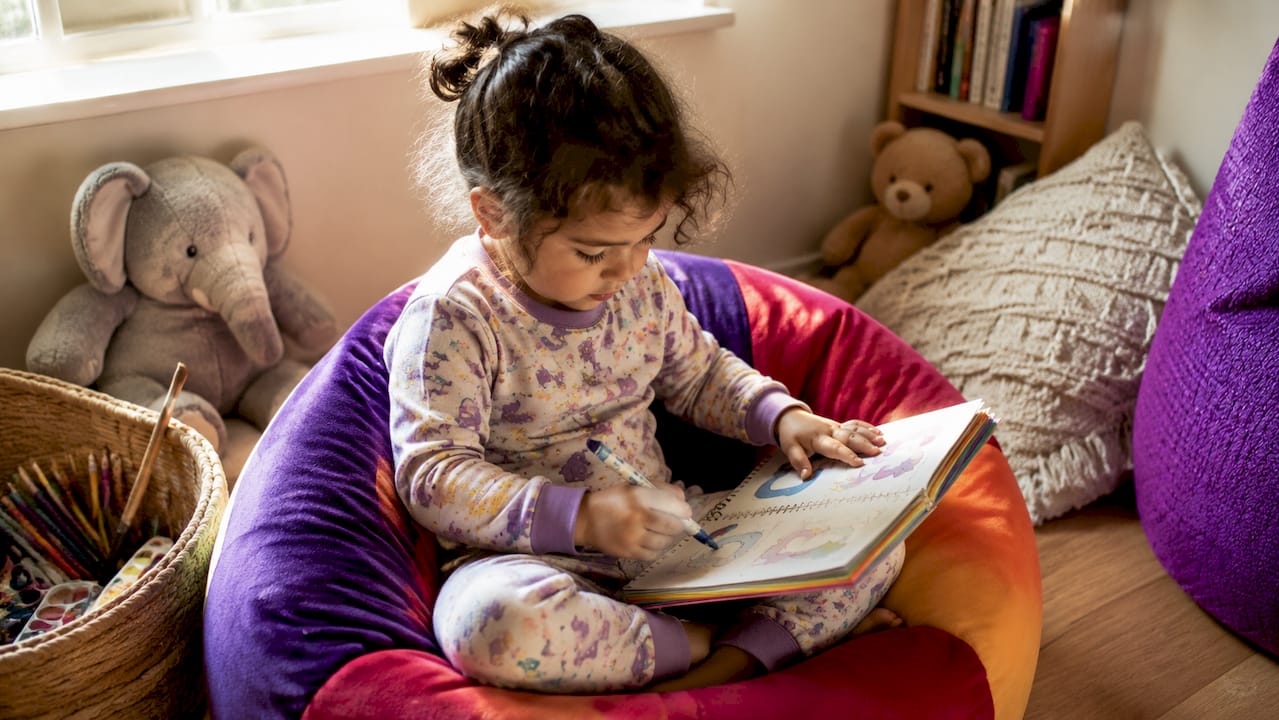
The brain benefits are real and measurable. Writing calms the amygdala and activates the prefrontal cortex, the region responsible for goal-setting and emotional regulation. That means a child who writes or draws with intention is also practicing self-control and focus. These are skills that pay dividends well beyond kindergarten.
Pro Tip: Before sitting your child down to write, spend 10 minutes on big-body play. Swinging, climbing, or even drawing on a vertical surface primes the shoulder and core muscles that make pencil control much easier.
You can find a detailed breakdown of writing readiness milestones to help you know exactly what to look for at each stage.
What are the real benefits of writing activities in preschool?
The benefits of writing activities go far beyond neat handwriting. Writing teaches children that their thoughts have value and that those thoughts can be captured and shared. That is a powerful idea for a four-year-old to hold.
The literacy connection is direct and well-documented. Preschoolers who engage regularly in print-focused tasks show stronger letter-sound correspondence and reading readiness than peers who rely on digital or analog games alone. Print exposure through writing, not just reading, accelerates the grasp of how language works on a page.
The emotional benefits are equally significant. Expressive writing improves mental clarity and physical health, with research showing that 50% of people with chronic conditions like asthma and rheumatoid arthritis saw significant health improvements after regular writing practice. The same emotional processing that helps adults also helps young children manage big feelings through marks on a page.
Expert voices in early childhood education are clear on this point:
“When adults focus on the meaning behind a child’s marks rather than the mechanical correctness, they build that child’s identity as a writer.” — Two Writing Teachers
That identity matters enormously. A child who sees herself as a writer takes more risks, tries harder words, and stays engaged longer. Praising the story behind the scribble builds confidence that no handwriting drill can replicate.
Pro Tip: When your child shows you their writing, ask “What does this say?” before anything else. Listening to the story behind the marks tells them their ideas matter more than their letter shapes.
How do different writing activities compare in development?
Not all writing activities deliver the same benefits. The table below shows how common preschool writing exercises each contribute to specific areas of development.
| Activity | Fine Motor Skills | Literacy Skills | Self-Expression |
|---|---|---|---|
| Scribbling and drawing | Builds grip and control | Introduces mark-making as communication | High: child-led and open-ended |
| Name writing | Strengthens finger dexterity | Teaches letter recognition and sequence | Moderate: personal and meaningful |
| Labeling drawings | Practices letter formation | Connects spoken words to print | High: child chooses what to label |
| Tracing scripts | Develops muscle memory | Reinforces letter shapes and patterns | Low to moderate: structured practice |
| Expressive story writing | Moderate: sustained pencil use | Strong: builds narrative and vocabulary | Very high: full creative ownership |
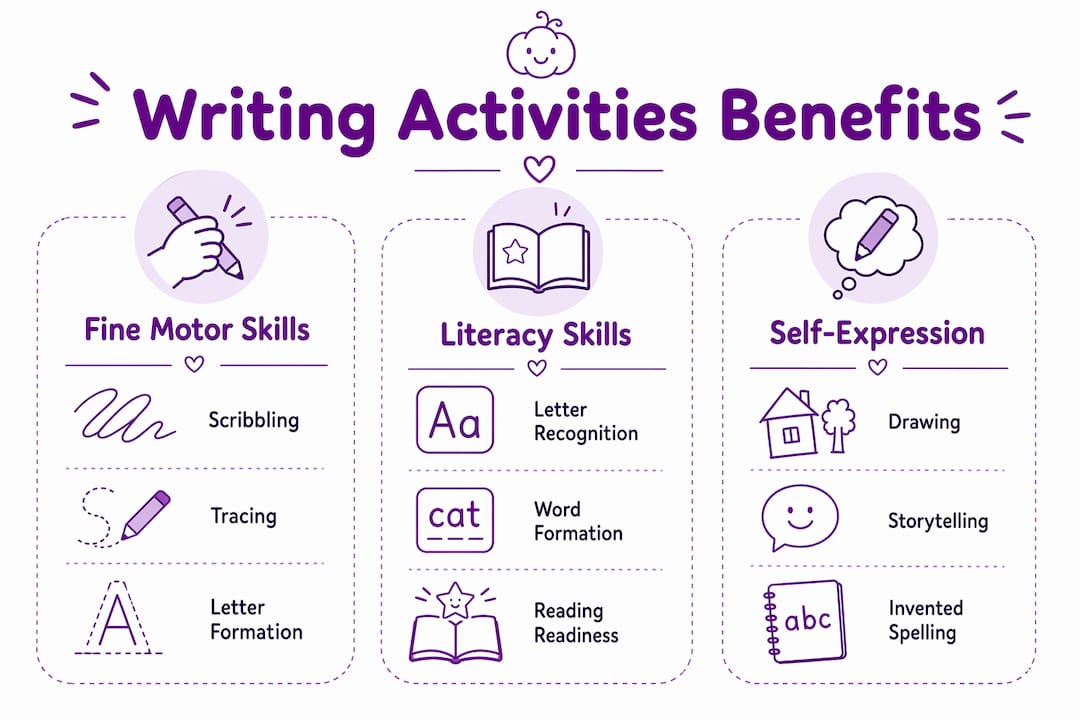
Tracing deserves special attention. Traceable scripts and repeated practice help children develop the muscle memory that makes letter formation automatic. Once formation is automatic, children can focus their mental energy on meaning rather than mechanics. This is why tracing books remain one of the most effective tools for script learning, particularly for children learning non-Latin alphabets like Hindi or Punjabi.
The research is also clear that print-focused activities outperform digital literacy games for early reading success. Screens can teach letter names, but they rarely give children the physical experience of forming letters, which is where deep learning happens.
Recognizing early writing readiness in your child helps you choose the right activity at the right time, so you are always working with their development rather than against it.
How can parents and educators integrate writing into daily routines?
The most impactful writing experiences happen when writing is embedded in meaningful daily tasks rather than treated as isolated drills. A child who helps write the grocery list understands that writing serves a real purpose. That understanding accelerates motivation faster than any worksheet.
Here are five practical ways to weave writing into everyday life:
- Grocery list writing. Let your child add one item to the list using their own marks or letters. The goal is participation, not perfection.
- Labeling drawings. After your child finishes a drawing, ask if they want to write what it shows. Even a single letter counts.
- Mail and messages. Encourage your child to “write” a card for a family member. Storytelling tools that connect writing to relationships make the activity feel important.
- Name labels. Let children label their belongings, lunchboxes, or artwork. Name writing is one of the earliest and most motivating writing tasks.
- Tracing practice with reusable books. Short, low-pressure tracing sessions build muscle memory without the fatigue of traditional worksheets. Reusable magic ink books let children practice repeatedly without wasting paper.
Balancing high-energy movement with calm writing play is the key to play-based writing motivation. A child who has just run around outside is often more focused and ready to sit and write than one who has been sitting all morning.
The goal at this stage is never perfection. The goal is joyful exploration that builds a child’s belief that writing is something they can do and something worth doing.
Key takeaways
Preschool writing activities build literacy, fine motor control, and emotional resilience when they are meaningful, movement-supported, and identity-affirming rather than correction-focused.
| Point | Details |
|---|---|
| Physical foundation comes first | Gross motor play builds the shoulder and core stability children need before fine motor writing tasks. |
| Print beats digital for literacy | Print-focused activities produce stronger early reading outcomes than digital literacy games. |
| Identity drives motivation | Praising the meaning behind a child’s marks builds writer confidence more effectively than correcting letter shapes. |
| Tracing builds muscle memory | Repeated tracing of scripts helps children form letters automatically, freeing mental energy for meaning-making. |
| Embed writing in daily life | Meaningful tasks like grocery lists and labeling accelerate letter-sound understanding and writing motivation. |
What i’ve learned about protecting a child’s writer identity
I’ve watched a lot of well-meaning adults undo months of writing progress in a single moment. A child proudly shows their scribbled story, and the adult says, “That’s great, but your letters are backwards.” The child’s face changes. They put the pencil down. They don’t pick it up again for weeks.
The research from Two Writing Teachers is something I return to often. Correcting invented writing too soon undermines a child’s identity as a writer before it has a chance to form. And once that confidence is gone, it takes far more effort to rebuild than it would have taken to protect it in the first place.
What actually works is listening. Ask the child what their writing says. Write their words down next to their marks so they see the connection. Celebrate the attempt, not the accuracy. Children who feel like writers write more. Children who write more get better. The correction can come later, gently, once the habit and the love are already in place.
I also believe strongly in the value of multilingual writing exposure at this age. A child who traces Punjabi letters alongside English letters is not confused. They are building a richer understanding of how writing systems work, and they are connecting to something larger than a classroom exercise. That connection is worth protecting too.
— Bobby
How Littlepumpkins makes early writing practice magical
Littlepumpkins was built for exactly this stage of learning. Their reusable magic ink tracing books let children practice letter formation in English, Hindi, Punjabi, and more, without the pressure of permanent marks or wasted paper.
Each book uses magic ink technology so children can trace, watch the letters appear, and start again. That reusability removes the fear of making mistakes, which is the single biggest barrier to writing confidence at this age. The engaging illustrations make every session feel like play rather than practice. If you are ready to give your child a writing experience that builds real skills and real joy, explore Littlepumpkins’ writing books for kids and find the right fit for your child’s language and learning goals.
FAQ
What age should children start writing activities?
Writing development typically begins between ages 2 and 4 with scribbling and drawing. Structured tracing and letter-focused activities are most effective starting around age 3.
Do print activities really help more than digital tools?
Yes. Preschoolers engaged in print-focused activities show stronger early literacy skills than those using digital literacy games, based on research into letter-sound correspondence and reading readiness.
How does writing help a child’s emotional development?
Writing activates the prefrontal cortex and calms the amygdala, building emotional regulation and resilience. Even scribbling with intention gives children a healthy outlet for processing feelings.
Should i correct my preschooler’s letter formation?
Avoid early correction. Praising the meaning behind a child’s marks builds writer identity and motivation. Gentle guidance on letter shapes can come once confidence and habit are established.
What is the best writing activity for a 3-year-old?
Scribbling, drawing with explanation, and name writing are the most developmentally appropriate starting points. Tracing books with reusable pages add structure without pressure and are especially effective for building muscle memory.